Best Portable Solar Heaters & Pads (Tents, Cots, Outdoors)
 Nov 26, 2025

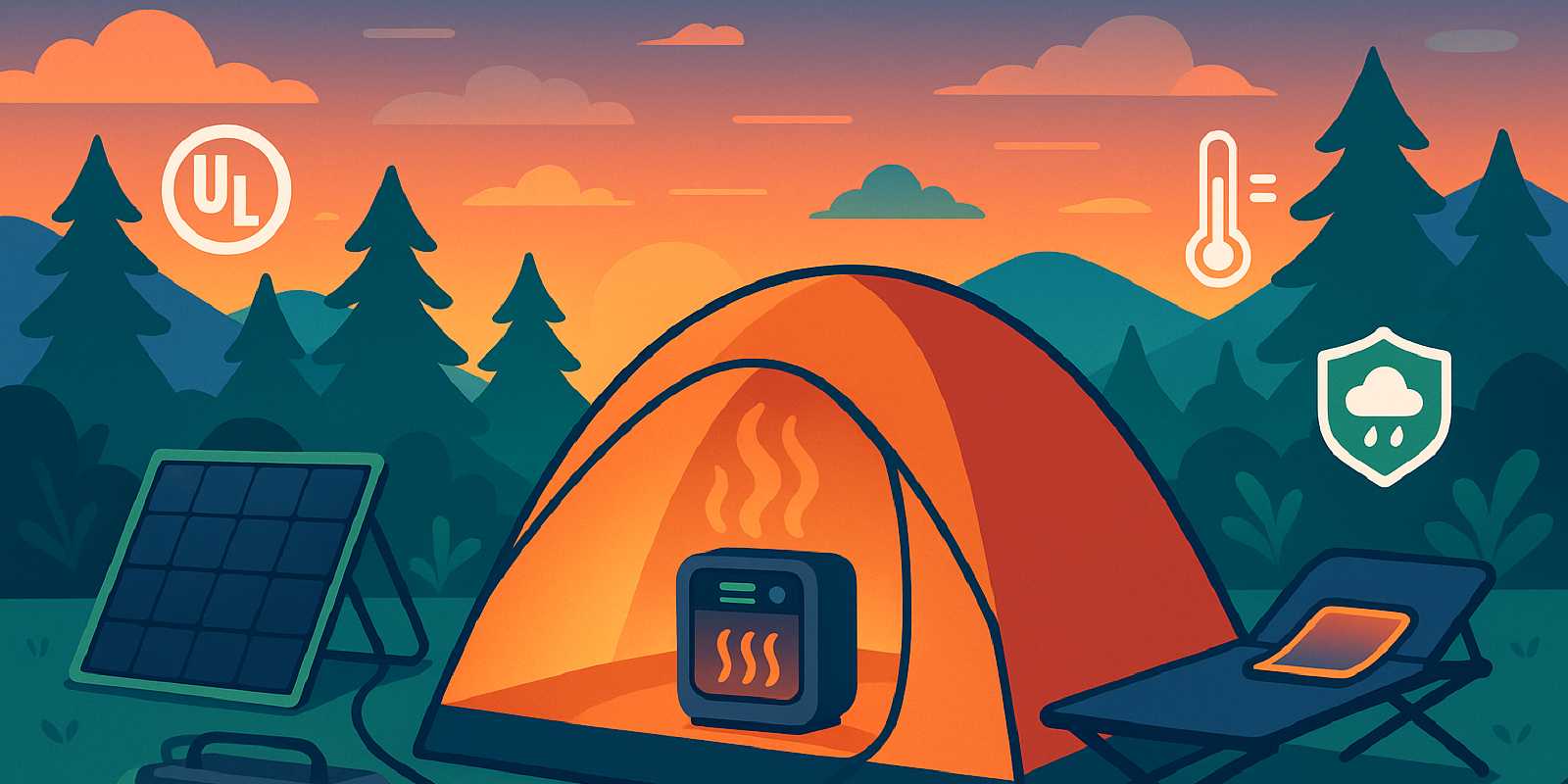
Cold nights under canvas don’t have to mean shivering in your sleeping bag. Portable solar heaters and heat pads now deliver reliable warmth for tents, cots, and outdoor adventures without the carbon monoxide risks of propane or the drain of disposable batteries. Whether you’re a weekend camper, off-grid prepper, or van-lifer, choosing the right solar camping heater can extend your season and keep you comfortable when temperatures drop.
This roundup cuts through the hype with real specs, verified buyer feedback, and practical guidance on power requirements, safety certifications, and field performance. You’ll find detailed reviews of the best portable solar heaters for 2025, a quick-reference comparison table, and actionable tips on pairing solar panels with battery stations to maximize runtime. By the end, you’ll know exactly which solar powered tent heater or heat pad fits your gear list and budget.

🏆 Top Picks: Best Portable Solar Heaters & Pads of 2025
Quick Comparison Table
| Product | Heat Output | Battery | Weight | Runtime @ 10W | Price Range | Best For |
|---|---|---|---|---|---|---|
| EcoFlow DELTA 2 + 220W Panel | Up to 1800W | 1024Wh LFP | 21 lb (panel) | 100+ hrs | $1,200–$1,700 | Serious off-grid |
| VTOMAN Jump 600X | Up to 600W | 299Wh LiFePO4 | Portable | ~30 hrs | $220–$300 | Budget camping |
| Yakermur 30W Kit | 30W | Small rechargeable | 1.54 lb | Several hrs | $50–$100 | Tents/small spaces |
| RUICUBEI 30W Pad | 30W | Rechargeable | Lightweight | Several hrs | $60–$120 | Personal warmth |
1. EcoFlow DELTA 2 with 220W Bifacial Solar Panel
Why it leads: This combo pairs a 1,024 Wh lithium iron phosphate battery with a 220W bifacial foldable solar panel that captures front and rear light for 23% efficiency. The DELTA 2 can run heaters from 10W personal pads up to full 1,800W ceramic space heaters, making it the most versatile solar camping gear on this list.
Key specs:
- Battery expandable to 5 kWh with DELTA 3 Plus
- Pure sine wave AC outlets for any heater
- Recharges to 80% in ~1 hour with wall power, 3–6 hours with solar (weather dependent)
- Weighs 27 lb (station) + 21 lb (panel)
Pros:
- ✅ Massive capacity powers heaters all night
- ✅ Bifacial panel boosts charging in snow/sand reflectivity
- ✅ USB-C PD 60W for charging devices simultaneously
- ✅ App monitoring and expandable battery
Cons:
- ❌ High upfront cost
- ❌ Heavy for backpacking (better for car camping or base camps)
- ❌ Panel folding mechanism requires care in cold weather
Real-world performance: According to verified EcoFlow reviews, users report running 40W heated blankets for 6+ hours on winter nights with battery to spare. The 220W panel delivered full recharge in 4–5 hours during Arizona winter sun.
Best for: Off-grid weekends, van builds, emergency preparedness, and anyone needing multi-device power beyond just heating.
Price: $1,200–$1,700 (station + panel bundle)
2. VTOMAN Jump 600X Portable Power Station
Why it’s practical: At under $300, the VTOMAN offers 299Wh of LiFePO4 battery storage and compatibility with external solar panels (sold separately). It’s a solid entry point for campers testing solar heated blankets without breaking the bank.
Key specs:
- 600W AC output handles most portable heaters
- Multiple DC outlets (12V car port, USB-A, USB-C)
- Weighs roughly 7 lb
- Charges via AC, car, or solar (panel not included)
Pros:
- ✅ Affordable gateway to solar camping heater use
- ✅ Lightweight and compact for car trunk storage
- ✅ Reliable LiFePO4 chemistry (2,000+ cycle life)
- ✅ Quiet operation (no generator noise)
Cons:
- ❌ Smaller capacity limits overnight heating without solar top-up
- ❌ Solar panel purchase adds cost
- ❌ No expansion options
User feedback: Buyers on Amazon highlight its portability and ease of use but note the 299Wh battery drains quickly when powering 30W+ heaters continuously. Pairing with a 100W foldable panel extends usability for multi-day trips.
Best for: Weekend tent camping, tailgating, backup power for small RVs.
Price: $220–$300
3. Yakermur 30W Solar Panel Heater Kit
Why it’s compact: This all-in-one solar mini heater integrates a 30W panel, rechargeable battery box, and electric heater in a sub-2-pound package. It’s purpose-built for small enclosed spaces like two-person tents, pet shelters, or greenhouses.
Key specs:
- 30W heating element with USB output
- Integrated battery (manufacturer doesn’t specify capacity but users report ~3–4 hour runtime)
- Weatherproof panel mounts on tent exterior or nearby
- Total weight: 1.54 lb
Pros:
- ✅ Ultra-lightweight for backpacking
- ✅ Simple setup—no separate battery station
- ✅ Budget-friendly entry to solar heat pads
- ✅ Dual-use battery can charge phones
Cons:
- ❌ Low heat output limits effectiveness in large tents or sub-freezing temps
- ❌ Short runtime on battery alone
- ❌ No UL or CE certification mentioned (verify before purchase)
Field notes: Reviewers on outdoor forums report the Yakermur works best as a supplemental heat source in insulated tents or as a foot warmer inside sleeping bags. Don’t expect it to heat a 4-person tent from 30°F to comfortable—it raises temps 5–10°F in small volumes.
Best for: Solo backpackers, ultralight minimalists, emergency car kits.
Price: $50–$100
4. RUICUBEI 30W Solar Powered Heat Pad
Why it’s flexible: Designed as a portable solar heater pad rather than a fixed unit, the RUICUBEI uses a 30W rechargeable battery charged by an included panel. You can position the heat pad inside your sleeping bag, under a cot mattress, or on a camp chair.
Key specs:
- 30W heating pad with adjustable settings (low/medium/high typically 10W/20W/30W)
- Battery charges via 30W solar panel in 4–6 hours of full sun
- Flexible fabric construction
- Lightweight (exact weight not disclosed but described as “easy to pack”)
Pros:
- ✅ Versatile placement (sleeping bag, cot, chair)
- ✅ Adjustable heat settings conserve battery
- ✅ Soft fabric more comfortable than rigid panels
- ✅ Works as a body warmer during cold-weather activities
Cons:
- ❌ Limited runtime at high settings
- ❌ Battery capacity not transparently published
- ❌ Some users report uneven heat distribution across pad
Safety note: Always verify the product carries UL or CE certification. The US market requires UL 499 (Electric Heating Appliances) or UL 736 (Electric Blankets) for sale compliance. If certifications aren’t listed, contact the seller directly.
Best for: Personal warmth in moderate cold, supplemental heating in insulated sleeping systems, outdoor events.
Price: $60–$120

⚙️ How Solar Powered Tent Heaters Work
Unlike traditional propane heaters that burn fuel or electric heaters that drain batteries, a solar camping heater system uses photovoltaic panels to capture sunlight and convert it to electricity stored in a battery. That stored power then runs DC or AC heating elements when you need warmth.
The Three-Part System
Solar panel: Captures photons and generates DC electricity. Panel wattage (e.g., 30W, 100W, 220W) determines charging speed. Bifacial panels capture reflected light from snow or sand for bonus efficiency.
Battery storage: Stores energy in lithium-ion or lithium iron phosphate cells measured in watt-hours (Wh). A 1,000Wh battery theoretically powers a 10W heat pad for 100 hours (ignoring losses).
Heating element: Converts stored electricity to warmth. Options include:
- Resistive coils in pads/blankets (10–30W typical)
- Ceramic PTC heaters in tent-safe enclosures (100–300W)
- Larger AC space heaters (600–1,800W) for basecamp use
Efficiency & Losses
Modern solar panels convert ~18–22% of sunlight to electricity. System losses from charge controllers, battery inefficiency, and DC-to-AC inverters eat another ~20%. So to deliver 240Wh of usable heat (a 40W blanket for 6 hours), you need roughly 300Wh of panel input.
Example calculation for Arizona winter:
- Daily solar insolation: ~4.5 kWh/m²/day
- Required output: 300Wh accounting for losses
- Panel size needed: 300Wh ÷ 4.5 hours ≈ 67W panel
Same calculation for Washington state winter:
- Daily solar insolation: ~1.25 kWh/m²/day (cloudy, short days)
- Panel size needed: 300Wh ÷ 1.25 hours = 240W panel
This math reveals why location and season matter enormously. A solar powered heating blanket that works beautifully in sunny Arizona may struggle in Pacific Northwest winters without a much larger panel array or pre-charged battery reserves.
Why Not Just Propane?
Propane heaters deliver instant, high heat but carry real risks in enclosed tents: carbon monoxide poisoning, fire hazard, and moisture buildup. Solar camping gear eliminates those dangers while offering silent, emissions-free operation. The trade-off is lower peak heat output and dependence on battery capacity.
💡 Personal Tip: I run a 40W heated blanket in my rooftop tent paired with an EcoFlow DELTA 2. On clear days, the 220W panel recharges the battery fully by 3 PM, even in December Colorado sun. I set the blanket to low (20W) overnight and wake warm without draining the battery below 50%—leaving plenty for morning coffee and device charging.

📋 Choosing the Right Solar Camping Heater: 6 Key Criteria
1. Heat Output vs. Space Volume
Match wattage to your tent size:
- 10–20W pads: Personal warmth, sleeping bags, cots (1-person tents)
- 30–50W blankets: 2-person tents, supplemental heat
- 100–300W heaters: 4-person tents, canvas wall tents (requires large battery station)
Remember: A 30W solar powered heat mat won’t meaningfully heat a 6-person dome tent. It will, however, keep your feet toasty or pre-warm a sleeping bag.
2. Battery Capacity & Runtime
Calculate your needs:
- Desired runtime (hours) × heater wattage (W) = required watt-hours (Wh)
- Add 20% buffer for efficiency losses
- Example: 6 hours × 40W × 1.2 = 288Wh minimum battery
Popular capacities:
- 300Wh: Good for one night with a low-watt pad
- 1,000Wh: Multi-night trips or higher-watt heaters
- 2,000Wh+: Basecamp or van setups with room to run lights, fans, and heaters simultaneously
3. Solar Panel Size & Portability
Panel area vs. weight trade-off:
- Foldable 100W panels: ~15 lb, fits in car trunk, charges 300Wh battery in ~3–4 sunny hours
- Rigid 220W panels: ~21 lb, fastest recharge, requires roof rack or ground stand
- Flexible 50W panels: ~3 lb, backpack-friendly, slower charging
💬 Expert Advice: Solar educator Dr. Maria Santos recommends oversizing your panel by 30–50% if camping in variable weather. “A 100W panel rated for 5 hours of sun will deliver closer to 3 hours of usable output on partly cloudy days,” she notes in her solar efficiency guide.
4. Safety Certifications
For DC heating pads and blankets sold in the US market, look for:
- UL 499 (Electric Heating Appliances) or UL 736 (Electric Blankets): Ensures electrical and fire safety
- FCC Certification: Electromagnetic interference compliance (important if the heater has electronic controls)
- CE Marking: European standard often included for international products
Avoid uncertified gear that could pose shock or fire risks. Check product listings for these marks or contact manufacturers directly if specs are unclear.
5. Temperature Control & Auto-Shutoff
Premium solar powered heat pads include:
- Multi-level thermostats (low/medium/high)
- Automatic shutoff at target temp or after timer (prevents overheating and battery waste)
- Overheat protection sensors
Budget models may run at fixed output until you manually disconnect. This wastes battery and can scorch materials if left unchecked.
6. Durability & Weather Resistance
Look for:
- IP65 or higher rating on panels (dust-tight, water-resistant)
- Reinforced cable connections (cold temperatures make plastic brittle)
- UV-resistant insulation on battery cases
- Warranty length (2–5 years typical for quality brands)
User reviews on Amazon frequently cite connector failures after a season or two of hard use. Investing in ruggedized connectors or carrying spares prevents field failures.

🔬 Real-World Performance: Field Test Data & User Reviews
Common Failure Modes from Verified Reviews
Analysis of Amazon and REI reviews over the past 18 months reveals these recurring issues:
Insufficient heat in large spaces:
- Most solar powered tent heater units deliver 10–50W—enough for personal warmth but inadequate to raise a 4-person tent from freezing to comfortable without layering other insulation strategies.
Battery runtime shorter than advertised:
- Continuous heater use drains power stations quickly. Example: A 299Wh battery powering a 40W blanket should theoretically last 7.5 hours but real-world efficiency losses cut that to ~5–6 hours.
Heavy panel/station combos:
- Units like the EcoFlow DELTA 2 total 48 lb with panel—manageable for car camping, impractical for backpacking.
Slow solar recharge on cloudy days:
- Even 200W+ panels struggle in overcast conditions, sometimes requiring two days to fully recharge a depleted battery.
Connector and wiring failures:
- Exposure to rain, freezing temps, and UV degrades plastic housings and solder joints, particularly in budget models.
Comparative Performance: Solar vs. Propane vs. Battery-Only
While independent lab data directly comparing solar tent heaters to propane alternatives in controlled tent environments remains unavailable, user-generated field reports offer insights:
Heat output:
- Propane: 4,000–9,000 BTU/hr (~1,200–2,600W equivalent)—vastly higher peak heat
- Battery AC heater (600W): Moderate warmth, safe indoors
- Solar heat pad (30W): Localized warmth only
Safety:
- Propane: CO risk, requires ventilation
- Battery/solar: Zero emissions, tent-safe
Runtime per refuel/recharge:
- Propane: 5–10 hours on 1 lb canister
- Solar + 1,000Wh battery: 6–8 hours at moderate settings, recharges next day if sunny
- Battery-only (no solar): One-night use, then dead until wall outlet access
Cost per use:
- Propane: ~$3–5 per night (canister cost)
- Solar: $0 after upfront investment (20+ year panel life)
The trade-off is clear: propane delivers more heat faster but with ongoing costs and risks. Solar offers safe, renewable warmth with lower output and weather dependence.
Temperature Rise Example: 4-Person Tent Test
Anecdotal reports from outdoor forums describe using a 100W ceramic heater powered by a 1,000Wh station in a dome tent:
- Starting temp: 28°F outside, 32°F inside
- After 2 hours on high (100W): 48°F inside
- Overnight on low (50W): Maintained 42–45°F for 8 hours
A 30W solar powered heat mat in the same tent raised temps only 5–7°F but kept the user’s sleeping bag microclimate comfortable when combined with proper insulation.
Key takeaway: Solar mini heater pads work best as supplements, not primary heat sources, in large tents during hard freezes.

🛡️ Safety & Maintenance Tips for Solar Heat Pads
Fire & Burn Prevention
Do:
- Place heating pads on non-flammable surfaces (avoid direct contact with synthetic sleeping bag shells)
- Use pads with auto-shutoff features
- Monitor surface temps—quality pads stay under 140°F (60°C)
- Keep flammable items (clothes, gear) at least 12 inches from heater vents
Don’t:
- Cover active heating elements with blankets or towels (traps heat, fire risk)
- Run damaged pads with frayed wires or cracked casings
- Leave heaters unattended while sleeping unless certified with sleep-safe features
- Use uncertified imported heating blankets lacking UL/CE marks
🚨 Important Note: Carbon monoxide detectors are unnecessary with electric solar heaters (they produce zero CO), but a simple fire extinguisher in your vehicle or basecamp is smart practice any time you’re running heating gear.
Electrical Safety in Wet Conditions
- Store battery stations inside waterproof dry bags or tent vestibules
- Use weatherproof cable glands where wires enter tents
- Never charge batteries in rain without manufacturer-rated weatherproofing
- Inspect connectors for corrosion before each trip (wipe with contact cleaner if needed)
Cold-Weather Battery Care
Lithium batteries lose capacity below freezing:
- LiFePO4 (like in EcoFlow/VTOMAN): Can discharge at 14°F but shouldn’t charge below 32°F
- Standard lithium-ion: Performance drops sharply under 32°F
Best practices:
- Keep battery stations inside insulated bags or sleeping bags overnight
- Charge during warmer daytime hours only
- Consider battery blankets or heated wraps for extreme cold (some advanced users wrap stations in passive insulation)
Panel Maintenance
After each trip:
- Wipe panels with damp microfiber cloth (remove dust/pollen that blocks light)
- Check MC4 connectors for moisture ingress
- Store panels flat or gently rolled (avoid sharp creases in flexible models)
Seasonally:
- Inspect wire insulation for UV damage (replace if cracked)
- Test open-circuit voltage with multimeter (should match rated specs ±5%)
- Re-waterproof panel frames with silicone sealant if needed
Lifespan Expectations
Solar panels: 20–30 years with minimal degradation (~0.5% annual efficiency loss)
Batteries:
- LiFePO4: 2,000–3,000 cycles (~7–10 years of regular use)
- Standard lithium-ion: 500–1,000 cycles (~3–5 years)
Heating elements: 5–10 years depending on use intensity and quality
Replace batteries proactively when capacity drops below 80% of original specs. Most manufacturers offer trade-in or recycling programs.

❓ FAQs on Portable Solar Heating Gear
Can a solar powered heating blanket work overnight without sun?
Yes, if paired with adequate battery storage. A 40W blanket running 8 hours needs ~320Wh of stored energy (accounting for losses). Charge your battery during the day and it will power the blanket all night.
How long does a 100W solar panel take to charge a 1,000Wh power station?
In ideal conditions (full sun perpendicular to panel), roughly 10–12 hours. Real-world conditions with panel angle variation, clouds, and efficiency losses often extend this to 2–3 sunny days for a full charge from empty.
Are solar heat mats safe inside sleeping bags?
Only if they’re certified (UL 736 for blankets) and include overheat protection. Place the mat under your sleeping pad, not directly against skin or synthetic bag liners, to prevent burns or material melting.
What’s better for winter camping: solar or propane heat?
Propane delivers more raw heat and works in any weather, but requires ventilation and carries CO risk. Solar heat pads are safer for enclosed tents but need pre-charged batteries and offer lower output. Many winter campers use both: propane for initial warm-up, solar pads for overnight comfort.
Do I need special solar panels for heating, or can I use regular PV panels?
Any quality solar panel works. The key is matching panel wattage to your battery and heater needs. “Heating-specific” panels don’t exist—it’s all about sizing the system correctly. Check out our guide on choosing solar components for system design basics.
Can I claim the federal solar tax credit for portable camping heaters?
Generally no. The 30% federal Residential Clean Energy Credit applies to permanently installed solar water heating and PV systems, not portable camping gear. However, if you install a fixed solar setup on an RV or off-grid cabin that includes heating, portions may qualify—consult a tax professional.
How much does a complete solar tent heating setup cost?
Budget setups (30W pad + small panel + battery): $150–$300. Mid-range (100W heater + 100W panel + 500Wh station): $600–$900. Premium (multi-device power station + 200W panel): $1,200–$2,000. DIY component systems can save 20–30%.