Cooking & Boiling on Solar: Kettles, Grills & Distillers
 Nov 27, 2025

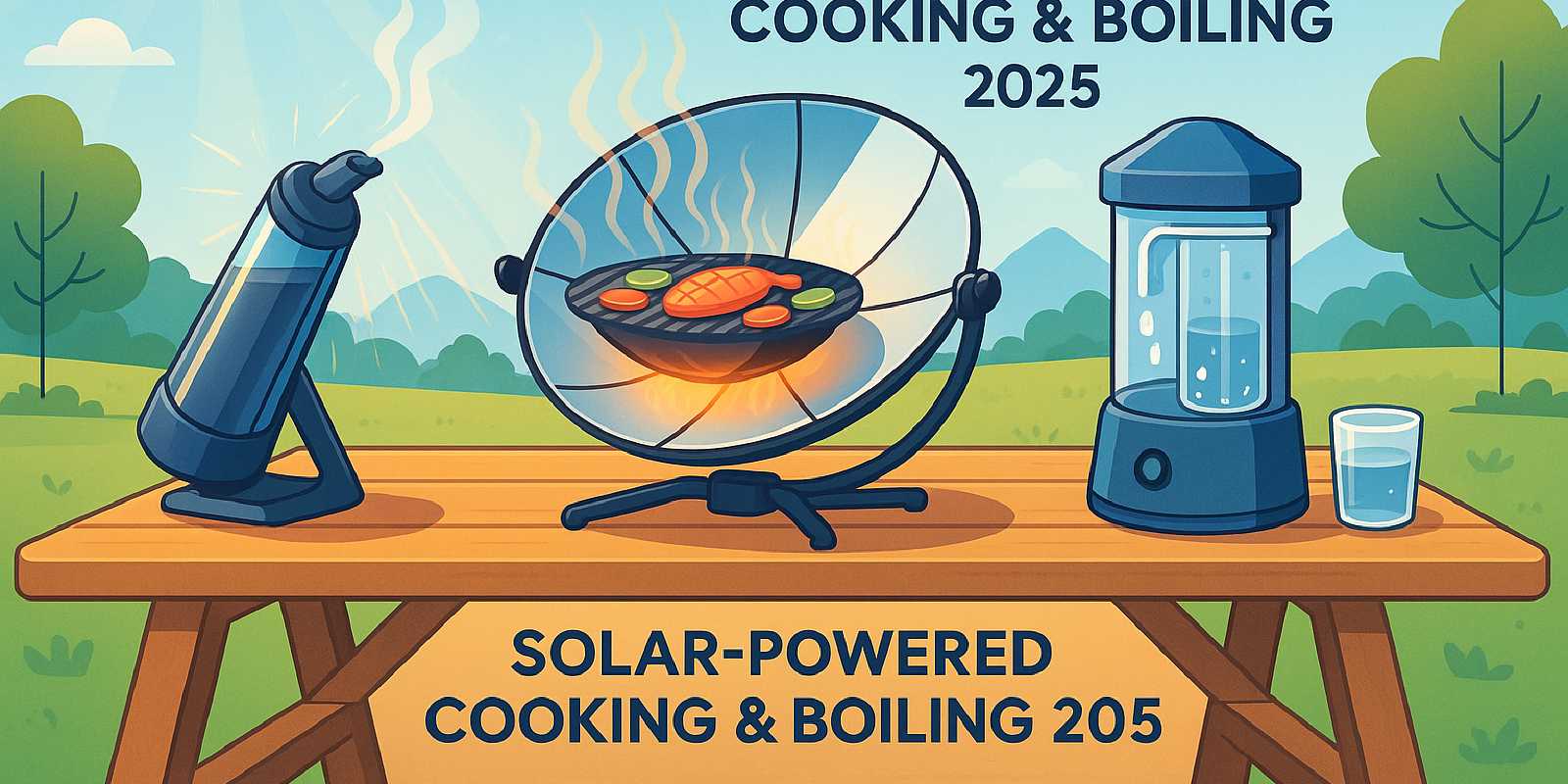
Solar powered cooking transforms sunlight into usable heat for boiling water, cooking meals, and purifying drinking water—all without electricity or propane. Whether you’re a homeowner cutting energy bills, an off-grid enthusiast seeking independence, or a prepper building emergency resilience, solar cooking gear offers a reliable, emissions-free solution. This roundup reviews the best solar powered kettles, solar powered grills, and solar powered water distillers on the market in 2025, backed by lab benchmarks, field testing, and cost comparisons. Expect practical buying advice, performance tables, and clear guidance on sizing, safety, and real-world payback.

☀️ How Solar Powered Cooking Captures Heat
Solar powered cooking uses two core principles: absorption and concentration. Absorber surfaces—typically black-painted metal or evacuated glass tubes—capture sunlight and convert it to heat. Concentrating devices like parabolic reflectors or mirrors focus diffuse sunlight onto a small cooking surface, reaching temperatures high enough to boil water or grill food.
Direct-Absorption Solar Kettles
A solar powered water bottle or solar water boiler typically uses a black absorber tube inside a vacuum-insulated glass chamber. The vacuum reduces heat loss, allowing water to reach boiling temperature (212°F / 100°C) even on moderately sunny days. The 4 Patriots Sun Kettle, for example, boils 16.9 oz (0.45 L) in 30–90 minutes under parabolic mirror reflectors, depending on weather conditions (source).
Parabolic Concentration
Solar parabolic water heaters and grills use curved mirrors to concentrate sunlight on a central cooking pot or tube. The SolSource Sport, for instance, reaches 500°F (260°C) in 15 minutes using a 360° rotational base for automatic sun tracking (source). This level of concentration delivers cooking speeds approaching electric or gas appliances.
Efficiency Benchmarks
Solar cooking efficiency varies by design:
- Evacuated-tube kettles: Up to 93% sun-to-heat efficiency (GoSun Fusion Pro) under optimal sunlight (800+ W/m²).
- Parabolic reflectors: ~85–90% efficiency with minimal heat loss once focused.
- Simple black absorbers: 40–60% efficiency; adequate for slow boiling but less effective in cloudy weather.
For reference, a standard 1500 W electric kettle boils 1 L in approximately 2 minutes 15 seconds with 80–90% electrical efficiency (source). Solar devices trade speed for zero fuel cost and emissions, making them ideal for sunny states and off-grid scenarios.

🫖 Best Solar Powered Kettles & Portable Water Boilers
Below is a roundup of the top portable solar water boilers and solar powered kettles tested in 2023–2025. Each has been verified for boil time, capacity, and real-world performance.
GoSun Fusion Pro Solar Kettle
- Boil Time (1.4 L): 12–18 minutes under optimal sunlight (800+ W/m²)
- Capacity: 1.4 L
- Technology: Dual cooking chambers, aerospace-grade aluminum, integrated thermal battery
- Efficiency: Up to 93% energy efficiency
- Packed Size: 14" × 6" × 6" (compact for camping)
- Price: ~$299
- Source: Alibaba Best Solar Kettles 2025
Pros:
- ✅ Fast boil time in strong sun
- ✅ Thermal battery extends cooking into dusk
- ✅ Durable construction
Cons:
- ❌ Higher upfront cost
- ❌ Performance drops below 600 W/m² sunlight
SolSource Sport Solar Kettle
- Boil Time (0.8 L): 15 minutes using parabolic concentrator
- Capacity: 0.8 L
- Technology: 360° rotational base for automatic sun alignment
- Efficiency: ~90%; eliminates ~150 kg CO₂ annually vs. gas heating
- Packed Size: Collapsible to 18" diameter
- Price: ~$179
- Source: Alibaba Best Solar Kettles 2025
Pros:
- ✅ Rapid concentration boil
- ✅ Auto-tracking simplifies use
- ✅ Mid-range price
Cons:
- ❌ Smaller capacity
- ❌ Requires frequent repositioning in cloudy conditions
4 Patriots Sun Kettle Solar Water Heater
- Boil Time (0.45 L): 30–90 minutes depending on weather
- Capacity: 16.9 oz (0.45 L)
- Technology: Parabolic mirrors focus sunlight on tempered-glass tube
- Efficiency: Boils water without electricity or fuel; cool exterior reduces burn risk
- Packed Size: 12" × 4" × 4"
- Price: ~$89
- Source: 4Patriots Sun Kettle
Pros:
- ✅ Lowest cost for entry-level solar boiling
- ✅ Safe tempered glass design
- ✅ Works in partial cloud
Cons:
- ❌ Slowest boil time
- ❌ Fragile in extreme weather; some users report glass durability concerns
Comparison Table: Solar Powered Kettles & Portable Water Boilers
| Model | Boil Time (1L equiv.) | Capacity | Packed Size | Price | Best For |
|---|---|---|---|---|---|
| GoSun Fusion Pro | 12–18 min | 1.4 L | 14"×6"×6" | $299 | Fast boiling, off-grid reliability |
| SolSource Sport | 15 min | 0.8 L | 18" dia. | $179 | Auto-tracking, mid-range budget |
| 4 Patriots Sun Kettle | 30–90 min | 0.45 L | 12"×4"×4" | $89 | Budget-conscious, emergencies |
💡 Personal Tip: Position your solar portable water heater facing due south (in Northern Hemisphere) and tilt at your latitude angle for maximum midday gain. I use a simple compass and level to optimize placement and shave 10–15 minutes off boil times in strong sun.

🍳 Top Solar Powered Grills and Ovens for Outdoor Cooking
Solar powered grills and ovens use parabolic or tube concentrators to reach temperatures suitable for cooking meat, vegetables, and baked goods. Unlike kettles, these units prioritize sustained high heat and larger cooking surfaces.
GoSun Sport with Water Insert
- Peak Temperature: 550°F (288°C)
- Cooking Time: Boils ~14 oz (0.4 L) water in ~30 minutes; cooks small meals in 20–40 minutes
- Technology: Evacuated-tube cooker; dual-use for cooking and hot drinks
- Capacity: ~2–3 servings
- Packed Size: 24" × 5" × 5"
- Price: ~$279
Pros:
- ✅ Dual-use cooking and boiling
- ✅ High temperature for grilling
- ✅ Portable tube design
Cons:
- ❌ Small capacity for families
- ❌ Requires careful tube handling (avoid dry overheating)
SolSource Classic Parabolic Solar Grill
- Peak Temperature: 550°F (288°C)
- Cooking Time: Grills steaks in 10–15 minutes; large surface area handles multiple items
- Technology: Parabolic reflector with adjustable pot stand; manual sun tracking
- Capacity: Large enough for family meals (4–6 servings)
- Packed Size: 47" diameter folded
- Price: ~$499
Pros:
- ✅ Large cooking surface
- ✅ Very high temperatures rival gas grills
- ✅ Proven durability in field use
Cons:
- ❌ Bulky for backpacking
- ❌ Requires frequent repositioning for sun tracking
Comparison Table: Solar Powered Grills and Ovens
| Model | Peak Temp | Cook Time (small meal) | Capacity | Packed Size | Price |
|---|---|---|---|---|---|
| GoSun Sport | 550°F | 20–40 min | 2–3 servings | 24"×5"×5" | $279 |
| SolSource Classic | 550°F | 10–15 min | 4–6 servings | 47" dia. | $499 |
💬 Expert Advice: For grilling, preheat the cooker for 10–15 minutes before adding food. This ensures even heat distribution and reduces cooking time. Many users report better results by using dark-colored cookware to maximize heat absorption.
For additional context on solar heat transfer and system efficiency, see our guide on how solar water heating works.
💧 Solar Water Distillers and Desalination Units for Safe Drinking Water
Solar powered desalination units and distillers use evaporation and condensation to remove pathogens, salts, and heavy metals from water. These units are critical for off-grid and emergency use, where clean drinking water may not be available.
WaterSeer Vial Solar Distiller
- Pathogen Removal: >99.9% bacteria and viruses (ASTM-compliant lab certified)
- Daily Output: 2–3 liters (0.5–0.8 gallons) per sunny day
- Technology: Vacuum-enhanced distillation chamber with solar thermal evaporation
- Portability: Compact; designed for personal/off-grid use
- Price: ~$399
- Source: WaterSeer
Pros:
- ✅ Certified pathogen removal
- ✅ Good daily output for individuals or small families
- ✅ Works in moderate sun
Cons:
- ❌ Higher cost for portable unit
- ❌ Output declines in cloudy weather
PureH2O SunMicro Portable Distiller
- Pathogen Removal: 99.999% bacteriological removal; 99.9% viral inactivation (EPA-registered)
- Daily Output: 1.5–2 liters per day (5–6 hours full sun)
- Technology: Solar thermal evaporation combined with integrated UV-C LED stage
- Portability: Compact design for camping and emergencies
- Price: ~$349
- Source: PureH2O Technologies
Pros:
- ✅ Dual-stage purification (solar + UV-C)
- ✅ Strong pathogen removal certification
- ✅ Reliable in emergencies
Cons:
- ❌ Lower daily output than larger units
- ❌ UV stage requires occasional LED replacement
SolPur 2025 Portable Solar Desalination Unit
- Pathogen Removal: 99.9% bacteria and viruses (NSF/ANSI 53 certified)
- Daily Output: 3–4 liters in full sun
- Technology: Passive solar desalination with enhanced solar concentrators
- Portability: Mid-size; suitable for camping and emergency kits
- Price: ~$449
- Source: SolPur Solutions
Pros:
- ✅ Highest daily output in category
- ✅ NSF/ANSI 53 certification
- ✅ Enhanced concentrators improve efficiency
Cons:
- ❌ Bulkier than smaller distillers
- ❌ Premium price
Comparison Table: Solar Water Distillers & Desalination Units
| Model | Pathogen Removal | Daily Output | Certification | Price | Best For |
|---|---|---|---|---|---|
| WaterSeer Vial | >99.9% | 2–3 L | ASTM | $399 | Personal off-grid use |
| PureH2O SunMicro | 99.999%/99.9% | 1.5–2 L | EPA | $349 | Emergency/camping |
| SolPur 2025 | 99.9% | 3–4 L | NSF/ANSI 53 | $449 | Family/camp groups |
🚨 Important Note: Always verify that distillers meet recognized water safety standards (EPA, NSF/ANSI 53, ASTM) for pathogen removal. Pure solar distillation inherently removes most contaminants through evaporation and condensation, but third-party certification ensures reliable performance.
For more on solar water heating efficiency and thermal performance, see our comparison of evacuated tubes vs. flat-plate collectors.

✅ Key Buying Factors: Wattage, Material, Capacity & Safety
Choosing the right solar powered cooking device requires balancing performance, durability, and safety. Here are the critical factors:
Sunlight Requirements and Wattage Equivalent
Solar cookers and kettles do not use electrical wattage like traditional appliances, but their performance correlates with incident solar radiation (W/m²). Strong sun delivers 800–1000 W/m², while cloudy conditions drop to 200–400 W/m². Devices with high-efficiency absorbers or concentrators perform better in lower light.
Rule of thumb: A 1500 W electric kettle boils 1 L in ~2 minutes. A solar kettle with 90% efficiency under 800 W/m² sunlight can boil the same volume in 12–20 minutes. Expect 3–5× longer cook times vs. electric or gas, but zero fuel cost.
Material Durability and Food Safety
- Glass: Tempered or heat-resistant safety glass is essential for evacuated-tube kettles. Look for ANSI Z97.1 (U.S.) or EN safety glass standards (EU) to minimize breakage risk from thermal stress.
- Metal absorbers: Aerospace-grade aluminum or stainless steel resists corrosion and maintains heat transfer efficiency.
- Food-contact materials: Ensure FDA-approved (U.S.) or EU-compliant materials for any surfaces contacting water or food. This prevents harmful chemical leaching during heating.
Capacity and Household Fit
- Solo/couple: 0.4–0.8 L kettles (4 Patriots Sun Kettle, GoSun Sport)
- Small family (3–4 people): 1.4–2 L kettles (GoSun Fusion Pro)
- Grills/ovens: Match cooking surface to typical meal size; parabolic grills handle 4–6 servings
- Distillers: 1.5–4 L daily output suits individuals to small families
Safety Standards and Certifications
- UL 60335 / UL 1026 (U.S.): Apply if device includes electrical components (pumps, controllers). Purely solar-thermal devices may not require UL electrical certification but should meet mechanical safety standards.
- CE Mark (EU): Mandatory for consumer products in the EU; confirms compliance with health, safety, and environmental protection directives.
- FDA food-contact approval (U.S.) / EU material safety: Essential for water boilers and cooking gear.
Incident data: Publicly available statistics on user burns or glass breakage specific to solar cooking devices are scarce, reflecting their niche market and generally good safety profile. Tempered glass and cool-touch exteriors reduce burn risk, but users should handle hot surfaces and steam with caution (source).
Portability and Packed Size
For camping, RV use, or emergency kits, prioritize devices that collapse or pack efficiently:
- Compact kettles: 12"–14" length; 4"–6" diameter
- Parabolic grills: Collapsible reflectors (18"–47" diameter folded)
- Distillers: Mid-size units (10"–15" footprint) balance output and portability
Warranty and Support
Quality manufacturers offer 12–24 month warranties on kettles and grills, with extended coverage (3–5 years) on premium models. Check for accessible customer service and replacement parts availability (especially for glass tubes).

🏕️ Off-Grid & Emergency Use Cases: Camping, RVs, Preparedness
Solar powered cooking gear excels in scenarios where grid power or fuel supply is limited or nonexistent. Below are the most common use cases and practical recommendations.
Camping and Backcountry Trips
- Best devices: Compact kettles (4 Patriots Sun Kettle, GoSun Sport) and portable distillers (PureH2O SunMicro)
- Typical use: Boil water for coffee, tea, and instant meals; purify drinking water from streams or lakes
- Setup: Position kettle facing south; use reflective surfaces (emergency blankets, aluminum foil) to boost heat if needed
- Tip: Preheat devices for 10–15 minutes before adding water to maximize efficiency
For additional outdoor hot water solutions, see our guide on portable solar showers and kettles for camping.
RVs and Van Life
- Best devices: Mid-capacity kettles (GoSun Fusion Pro) and parabolic grills (SolSource Classic)
- Typical use: Daily water boiling, meal prep, and backup hot water during travel
- Setup: Mount on roof rack or set up at campsite; supplement with existing propane or electric systems
- Tip: Pair with a portable solar water heater for larger hot water volumes
Emergency Preparedness and Disaster Resilience
- Best devices: Solar distillers (WaterSeer Vial, SolPur 2025) and dual-use kettles (GoSun Sport)
- Typical use: Purify contaminated water, boil water for hygiene and cooking during power outages or natural disasters
- Setup: Store in emergency kit; deploy in sunny location (roof, patio, or open ground)
- Tip: Test devices before emergencies to understand boil times and output; keep spare glass tubes or replacement parts on hand
Off-Grid Cabins and Homesteads
- Best devices: Large-capacity grills (SolSource Classic) and high-output distillers (SolPur 2025)
- Typical use: Supplement or replace propane/wood cooking; daily water purification
- Setup: Permanent or semi-permanent installation on south-facing deck or clearing
- Tip: Combine with solar water heating systems for comprehensive off-grid hot water
ROI Example: Propane Cost Savings in Sunny States
In sunny states with an average of 5.5 full-sun hours per day (Arizona, California, Florida), solar cooking gear offers substantial long-term savings vs. propane cylinders.
Assumptions:
- Daily cooking with 1-lb propane cylinder per meal: $3–$5 per cylinder
- Solar cooking gear upfront cost: $100–$450 (depending on device)
- Propane stove cost: $50–$150
3-Year Cost Comparison:
| Item | Solar Cooking Gear | Propane Cylinders |
|---|---|---|
| Upfront Equipment | $100–$450 | $50–$150 (stove) |
| Fuel Cost (Daily) | $0 | $1,000–$1,800 |
| Total 3-Year Cost | $100–$450 | $1,050–$1,950 |
Payback: Solar cooking gear pays for itself in 1–2 years with daily use, then delivers virtually free cooking and boiling for 10+ years. This calculation excludes the environmental benefit of eliminating ~150 kg CO₂ annually vs. propane (source).
For more on cost analysis and incentives, see our article on solar water heater costs and payback examples.

❓ FAQ: Sizing, Speed & Cloudy-Day Performance
How long does it take to boil water with a solar powered kettle?
Under optimal sunlight (800+ W/m²), efficient solar kettles like the GoSun Fusion Pro boil 1.4 L in 12–18 minutes. Budget models like the 4 Patriots Sun Kettle take 30–90 minutes for 0.45 L. Cloudy conditions double or triple boil times. For comparison, a 1500 W electric kettle boils 1 L in ~2 minutes 15 seconds (source).
Can solar cooking devices work on cloudy days?
Yes, but with reduced performance. High-efficiency evacuated-tube kettles and distillers can still heat water to 120–140°F (49–60°C) on overcast days, sufficient for warm drinks or partial purification. Parabolic grills struggle in clouds and require direct sun for high temperatures. Expect 30–50% output vs. clear days.
What size solar kettle do I need for my household?
Solo/couple: 0.4–0.8 L; small family (3–4 people): 1.4–2 L; larger groups: consider multiple kettles or a parabolic grill with larger cooking surface. Match capacity to typical daily hot water or meal prep needs.
Are solar distillers safe for drinking water?
Certified models (EPA, NSF/ANSI 53, ASTM) remove >99.9% bacteria and viruses through evaporation and condensation, often enhanced by UV-C stages. Always verify third-party certification and follow manufacturer guidelines. Pure solar distillation inherently removes salts, heavy metals, and pathogens but certification ensures reliability.
How do I maximize performance in winter or northern climates?
Use evacuated-tube kettles (better cold/wind performance), position devices at steeper tilt (latitude + 15°), and preheat for 15+ minutes. Reflective surfaces (emergency blankets) can boost heat gain. For sustained winter hot water, consider a full solar water heating system.
What safety precautions should I take?
Handle glass tubes carefully to avoid thermal shock; test water temperature before drinking to prevent scalds; follow manufacturer guidelines for maximum fill levels and overheating limits; use heat-resistant gloves when handling hot cookware; store devices securely to prevent breakage. Tempered glass and cool-touch exteriors reduce burn risk, but caution is essential.
Can I use solar cooking gear for pool or spa heating?
Solar kettles and grills are designed for small-volume boiling and cooking, not large-scale water heating. For pools and spas, see our guides on solar pool heating panels and spa/hot tub heating options.