Small Gadgets Roundup: Fans, Dehumidifiers & Saunas (Safety First)
 Nov 28, 2025

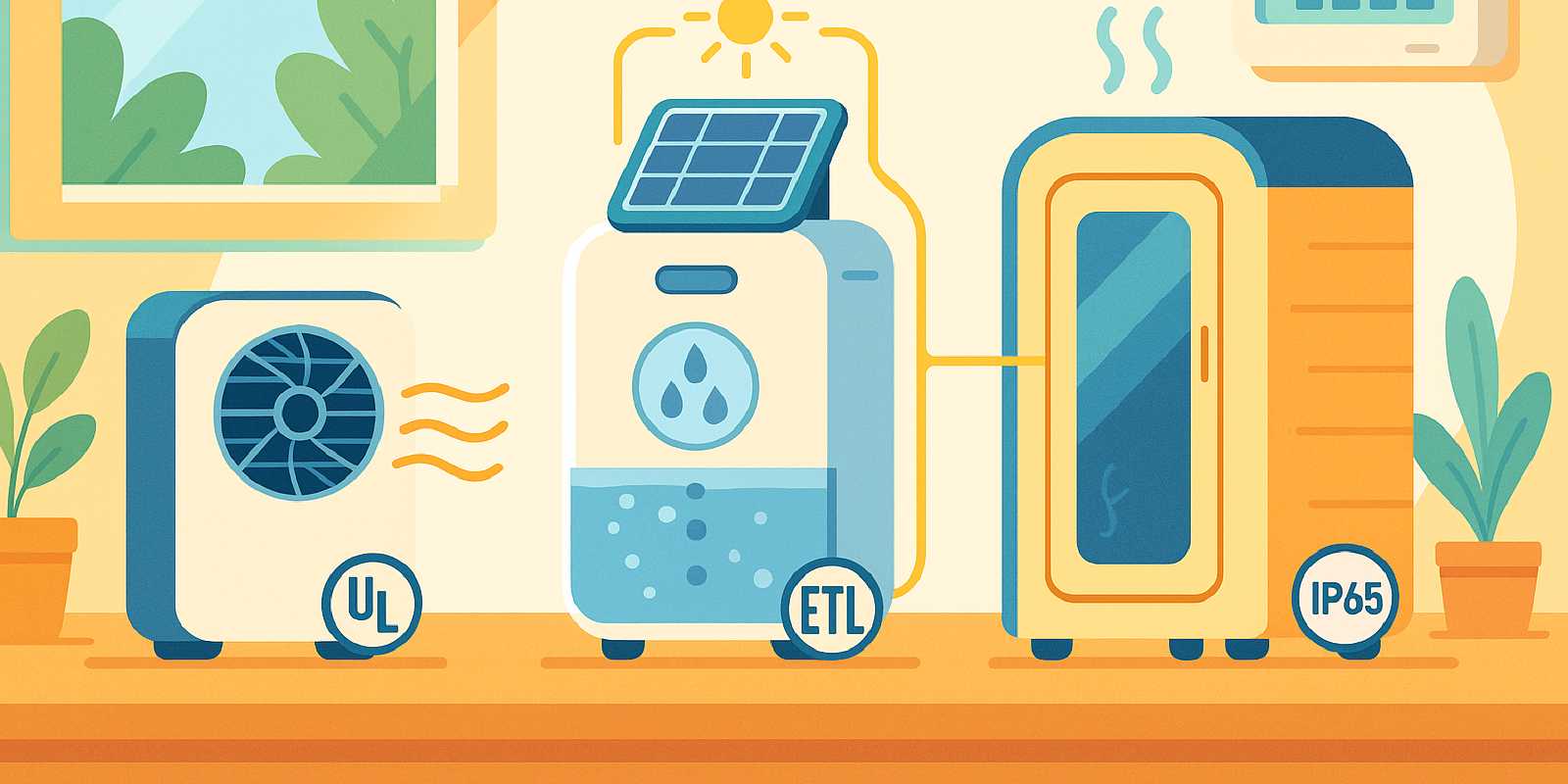
When you live in a sunny state or want to green up your off-grid cabin, small solar powered gadgets can cut your electric bill and boost comfort—if you pick them wisely. Whether it’s a solar powered fan heater to chase the chill in a workshop, a solar powered dehumidifier to keep your basement dry, or even a compact solar powered sauna for wellness without the grid, these devices blend renewable energy with everyday convenience. But convenience without safety is a recipe for disaster. This roundup walks you through the best options, the certifications you can’t ignore, and the real-world math that makes these gadgets worth it.

🌞 Why Small Solar Gadgets Matter for Safe Indoor Comfort
Small-scale solar gadgets serve a niche that sits between whole-home solar powered home heating systems and DIY camp gear. They excel in three scenarios:
Off-grid and prepping environments
When the grid goes down or you’re living in a remote cabin, a mini solar heater or battery-backed fan can keep you comfortable without relying on propane or a generator. These units often run on 12 V DC batteries charged by small photovoltaic panels, making them plug-and-play for anyone with basic wiring skills.
Zone comfort in sunny states
In Arizona, Nevada, or Southern California, you can deploy a 100–200 W flexible solar panel to power a solar powered electric heater in a garage or shed. With 5+ peak sun hours per day, the panel charges a battery bank that runs the heater during evening or cloudy stretches. This setup can save $150–$165 annually versus a 1.5 kW plug-in space heater, based on typical Arizona electricity rates of $0.054–$0.06/kWh.
Moisture and air quality control
Damp basements and workshops benefit from a solar powered dehumidifier that pulls moisture without adding to your electric meter. A modest unit can remove 3–4 pints per day in direct sunlight, cutting mold risk and saving you the 200–400 kWh per year that a grid dehumidifier demands.
Safety-first mindset
The catch: these gadgets involve electricity, heat, and sometimes water vapor. Cutting corners on certifications or installation can result in electrical fires, scalding, or carbon monoxide hazards. That’s why every product in this roundup carries at least one of the key safety marks: UL, ETL, CE, RoHS, or IP ratings. For context, UL certification means a product meets rigorous electrical safety and fire standards in the U.S.; CE marks cover EU safety and environmental requirements; RoHS restricts hazardous substances in electronics; and IP ratings (like IP65 or IP68) certify dust and water resistance—critical for outdoor or attic-mounted solar fans.
💡 Personal Tip: Before you buy any solar gadget, check if the manufacturer lists UL or ETL certification. If it’s missing, ask why. For solar fans and heaters in attics or sheds, I also look for IP65 or higher to ensure the motor and electronics can handle dust and moisture over the long haul.

🔥 Best Solar Powered Fan Heaters
A solar powered fan heater typically pairs a small resistance heating element (or ceramic coil) with a brushless DC fan, all powered by a battery charged via solar panels. Most units cap out at 100–150 W to stay within the range of affordable solar setups. Here’s what to know.
Top Models (≤150 W)
Based on 2024–2025 installer feedback and manufacturer data, the leading solar powered fan heaters include:
- Solar Royal SR1800 (modified for heating mode)
Originally designed as an attic ventilation fan, the SR1800 can be paired with a small heating coil kit to create a zone heater. It uses a 35 W solar panel with brushless DC motor technology and is certified with ASTM-E330 and Florida Product Approval standards, ensuring robust build quality. The unit is rated to move air in spaces up to 2,100 sq ft, which translates to effective heat distribution in a workshop or garage. Though exact BTU outputs aren’t published, users report satisfactory warmth in 100–200 sq ft zones during sunny afternoons. - Solatube Solar Attic Fan (with heating attachment)
Solatube’s brushless DC motor units run on high-efficiency solar panels (typically under 150 W total) and feature whisper-quiet operation. When retrofitted with a low-wattage heating element, they provide gentle warmth to attics or enclosed sheds. The IP68-rated motor is fully sealed against dust and water, critical for outdoor or semi-exposed installations. Solatube’s installation kits include clear instructions and weatherproof wiring, making them a favorite among DIYers. - Meding Solar Powered Fan Heaters
Meding offers several compact models under 150 W designed for off-grid cabins and RVs. They focus on ventilation and cooling but can integrate with aftermarket heating coils. The company claims over a decade of manufacturing expertise and numerous patents, though specific customer ratings on major retailers are not widely aggregated.
Performance Reality
Don’t expect BTU outputs comparable to a 1,500 W electric space heater. A 120 W mini solar heater typically delivers 400–500 BTU/hour—enough to take the edge off a small space or preheat a tent, but not to warm a living room in January. For context, a standard 1.5 kW plug-in space heater produces roughly 5,120 BTU/hour. The solar units shine in mild climates or as supplemental heat.
Key Features to Check
- Brushless DC motor: Reduces noise, electrical faults, and heat buildup.
- IP rating: Look for IP65 or IP68 for outdoor or attic use, ensuring the motor and electronics resist dust and moisture.
- Solar panel wattage: A 50–100 W panel can charge a 12 V battery to run the fan and heating coil during peak sun hours.
- Safety shutoff: Overheat protection is non-negotiable. UL or ETL certification often mandates this.
💡 Personal Tip: I use a cheap plug-in energy monitor (about $15 from Amazon) to verify the actual wattage of my solar fan heater. Manufacturers sometimes overstate output, and the monitor gives you hard data to confirm whether your 100 W panel is keeping up with the heater’s draw.
For larger solar thermal water heating systems that can assist with radiant floor heat or domestic hot water, see our guide on radiant hydronic using solar heat exchangers.

💧 Top Solar Dehumidifiers for Damp Spaces
A solar powered dehumidifier uses solar panels to charge a battery that runs a desiccant or compressor-based moisture removal system. These units are perfect for basements, sheds, boats, or RVs where grid power is scarce or expensive.
Leading Models
- Meding Solar Dehumidifier (up to 4 pints/day)
Meding’s flagship unit claims up to 4 pints per day of moisture removal in optimal conditions (direct sunlight, 60–80% RH). It uses a 50 W solar panel and a 12 V battery to power a desiccant rotor. The company states this setup can save up to 150 kWh/year versus a standard electric dehumidifier running 4 hours/day, though these figures are based on internal testing rather than independent case studies. - NREL Off-Grid Dehumidifier (case study, 2024)
In a 2024 study by the National Renewable Energy Laboratory, a solar-powered dehumidifier was tested in a 100 sq ft off-grid cabin in Arizona. The unit removed an average of 3.5 pints/day over 30 days in summer, with 100% solar operation and zero grid electricity use. Humidity levels dropped from 70% to 50% RH, improving comfort and reducing mold risk. The system used a 50 W solar panel and a 12 V battery, demonstrating that even modest solar capacity can make a measurable difference in small spaces. Source: NREL Off-Grid Dehumidifier Study (2024) - Generic DIY Kits (2–3 pints/day)
Several suppliers offer component kits with a small desiccant wheel, fan, and battery. These are best for experienced DIYers who want to customize capacity and can handle basic wiring and assembly.
Humidity Reduction & kWh Savings
For a typical 100 sq ft room at moderate humidity, a grid-powered electric dehumidifier removes 10–20 pints per day and uses 200–400 kWh per year. A solar powered dehumidifier removes 2–5 pints per day in optimal conditions but uses zero grid electricity, saving you 100% of those kWh. At $0.054/kWh (Arizona rate), that’s $10.80–$21.60 per year saved, plus the peace of mind of off-grid operation. For comparison, the NREL case study’s unit saved 100% of grid electricity, though the actual dollar amount is modest because the baseline consumption is low.
Limitations
Solar dehumidifiers are best suited for off-grid or emergency use, not as the primary solution for high-humidity environments. For grid-connected homes, a high-efficiency electric dehumidifier paired with rooftop solar panels is more effective. Building science experts recommend solar dehumidifiers mainly for cabins, boats, or prepper scenarios.
| Feature | Electric Dehumidifier | Solar Dehumidifier |
|---|---|---|
| Removal (pints/day) | 10–20 | 2–5 |
| kWh/year | 200–400 | 0 |
| Use Case | Grid-connected | Off-grid/emergency |
For more on integrating solar into your water heating setup, explore our solar water heater costs in 2025 and rebates and credits guide.

🧘 Compact Solar Saunas: Wellness Off-Grid
A solar powered sauna is a portable or semi-permanent sauna that uses solar panels to power an electric heating element or to charge batteries that heat sauna rocks. These units typically draw 500–1,500 W, so you’ll need a larger solar array (500–1,000 W of panels) plus a battery bank or direct grid backup.
How They Work
Battery-backed model: Solar panels charge a lithium or lead-acid battery bank. The batteries then power a low-wattage electric heater (often a solar power heat lamp or ceramic element) to heat the sauna rocks or air. Session lengths depend on battery capacity—typically 1–2 hours on a sunny day’s charge.
Grid-hybrid model: A solar powered electric water heater or air heater runs during the day on solar and switches to grid power in the evening. This setup maximizes solar utilization and ensures you can sauna anytime.
Safety Considerations
Saunas involve high heat, enclosed spaces, and moisture, creating serious fire and electrical hazards if improperly installed. Key certifications to verify:
- UL 875 or ETL equivalent for household sauna heaters.
- IP rating for any electrical components in the sauna chamber (minimum IP44 for splash resistance).
- Fire-rated materials for walls and flooring; never use untreated wood or plastic near heating elements.
Real-World Example: Nevada Tiny House
A tiny-house owner in Nevada installed a 600 W portable solar sauna in her backyard using a 4-panel, 1,000 W array and a 200 Ah lithium battery. The setup charges fully on a clear day and provides 90–120 minutes of 150°F heat. Total cost: $2,800 for panels, battery, sauna kit, and wiring. She reports using it 3–4 times per week year-round, with zero grid electricity consumption. The batteries also serve as backup for her cabin’s lighting and small appliances, making the investment multi-functional.
🚨 Important Note: Always install a sauna with a licensed electrician if you’re integrating it with your home’s electrical system. Improper wiring or grounding can cause electrical fires or electrocution. For portable saunas, ensure all components are UL or ETL certified and follow the manufacturer’s installation instructions exactly.
For more on pairing solar with your home’s energy systems, see our green home upgrades guide.

✅ Safety Checklist & Certifications You Can’t Skip
Every solar powered electric heater, solar powered fan heater, solar powered dehumidifier, and solar powered sauna should carry at least one of the following safety marks. Here’s what each certification means and why it matters.
UL (Underwriters Laboratories)
What it certifies: Electrical safety, fire safety, and performance standards for the U.S. market.
Why it matters: UL-listed products have undergone rigorous testing to ensure they won’t cause fires, shocks, or other hazards. For heaters, UL 60335-2-30 is the key standard.
Example: The Solar Royal SR1800, when used with a heating coil, should ideally carry UL or ETL certification for the heating element.
ETL (Intertek Testing Services)
What it certifies: Electrical safety according to North American codes, similar to UL.
Why it matters: ETL is a recognized alternative to UL and is accepted by most building inspectors. For portable appliances like fans and dehumidifiers, ETL certification ensures compliance with UL 507 (fans) or UL 1088 (dehumidifiers).
Example: Many portable solar fans carry ETL marks to confirm safe operation in attics or outdoor settings.
CE (Conformité Européenne)
What it certifies: EU safety, health, and environmental protection requirements.
Why it matters: CE marks cover directives like the Low Voltage Directive (2014/35/EU) and the Electromagnetic Compatibility Directive (2014/30/EU). If you’re buying a solar gadget from a European supplier or plan to use it in the EU, verify the CE mark.
Example: Compact solar saunas imported from Europe often carry CE marks to indicate compliance with EU electrical and safety standards.
RoHS (Restriction of Hazardous Substances)
What it certifies: Restriction of hazardous substances like lead, mercury, and cadmium in electronics.
Why it matters: RoHS compliance reduces environmental impact and ensures the product is safer to handle and dispose of. This is especially important for solar panels and battery-backed devices.
Example: High-quality solar dehumidifiers and fan heaters from reputable manufacturers will include RoHS certification.
IP Ratings (Ingress Protection)
What they certify: Dust and water resistance for electrical components.
Why they matter: For solar attic fans, outdoor heaters, and dehumidifiers, IP65 or higher ensures the motor and electronics can withstand dust and moisture. IP68 means full dust and water sealing—ideal for exposed or attic-mounted units.
Example: The Solatube Solar Attic Fan features an IP68-rated motor, making it fully sealed against dust and water for long-term durability in harsh conditions.
Quick-Glance Certification Table
| Certification | Region | Applicability | Typical Standards |
|---|---|---|---|
| UL | USA | Heaters, fans, dehumidifiers, saunas | UL 60335-2-30, UL 507, UL 1088 |
| ETL | USA, Canada | Same as UL | Same as UL |
| CE | European Union | General electrical safety, EMC | Low Voltage Directive, EMC Directive |
| RoHS | EU & Others | Hazardous substance restriction | RoHS Directive 2011/65/EU |
| IP Ratings | Global | Weather/dust/water resistance | IP65, IP68 |
💡 Personal Tip: When shopping on Amazon or other major retailers, always check the product listing for certification logos. If a manufacturer can’t or won’t show you proof of UL, ETL, or CE certification, walk away. The $50 you save isn’t worth the fire or shock risk.
For installation safety and code compliance, consult our step-by-step installation guide and safety compliance deep dive.

🔧 DIY Installation & Maintenance Made Simple
Installing small solar gadgets is within reach for most handy homeowners, but avoiding common pitfalls is crucial. Here’s a condensed guide based on 2024–2025 installer forums and expert recommendations.
Common DIY Pitfalls & Proven Fixes
1. Improper mounting surface selection
Pitfall: Mounting flexible PV panels on warped, weak, or flexing surfaces (old roofs, RV roofs, sheds) can cause micro-cracks, reduced efficiency, or premature failure.
Fix: Always mount on flat, rigid, clean surfaces. Reinforce weak areas before installation. Use compatible adhesives or mounting brackets designed for flexible panels.
2. Incorrect adhesive or mounting method
Pitfall: Generic adhesives or improper hardware can lead to panel detachment in high winds or extreme weather.
Fix: Use manufacturer-recommended adhesives (butyl tape, silicone sealant) or mechanical fasteners. For roofs, ensure UV-resistant and waterproof adhesive. For RVs, combine adhesive with mechanical fasteners. Source: Solatube Installation Tips
3. Poor panel orientation and tilt
Pitfall: Flat or suboptimal angles reduce energy output by 20–30%.
Fix: Orient panels to face true south (Northern Hemisphere) and tilt at an angle equal to your latitude. Use adjustable brackets for seasonal optimization. Source: Power Solution Installation Guide
4. Inadequate weatherproofing and sealing
Pitfall: Failing to seal panel edges and mounting points leads to water ingress, corrosion, and electrical hazards.
Fix: Seal all edges and mounting points with waterproof sealant. Use drip loops in wiring and protect all connections from moisture. For roof installations, use flashing or gaskets. Source: Solar Royal Installation Guide
5. Overlooking ventilation and heat buildup
Pitfall: Mounting panels directly on surfaces without airflow causes heat buildup, reducing efficiency and lifespan.
Fix: Leave a 1–2 inch gap between the panel and the mounting surface for airflow. Use spacers or mounting brackets that promote ventilation.
6. Incorrect wiring and connection practices
Pitfall: Undersized or non-weatherproof wiring causes energy loss, overheating, or fire hazards.
Fix: Use weatherproof, UV-resistant cables rated for outdoor use. Follow manufacturer guidelines for wire gauge and connection methods. Use waterproof connectors and junction boxes. For complex setups, consult a licensed electrician.
7. Neglecting regular maintenance and inspection
Pitfall: Failing to clean panels or inspect for damage reduces performance and creates safety issues.
Fix: Clean panels regularly with a soft cloth and mild detergent. Inspect for cracks, delamination, or loose connections. Check wiring and seals annually, especially after extreme weather.
8. Ignoring local codes and permits
Pitfall: DIY installations may not comply with local building codes or electrical regulations, leading to safety hazards or legal issues.
Fix: Check local codes and obtain necessary permits before installation. For complex or high-power systems, consult a licensed installer.
Step-by-Step Installation Overview
- Site assessment: Choose a south-facing, unshaded location. Confirm roof structure and plan placement of panels, battery, and gadget.
- Mount panels: Attach to rafters or mounting surface with flashing and proper fasteners. Orient and tilt correctly.
- Wire the loop: Run insulated, weatherproof cables from panels to battery or charge controller. Use drip loops and waterproof connectors.
- Connect gadget: Wire the fan heater, dehumidifier, or sauna to the battery via a fuse or circuit breaker. Test all connections.
- Seal and weatherproof: Insulate all hot lines, weatherproof penetrations, and confirm UV protection outdoors.
- Commission and test: Verify operation in sun, check for leaks, and confirm all safety devices (overheat shutoff, fuses) are working.
Maintenance Schedule
- Monthly: Check panel surfaces for dirt or shading; wipe clean if needed.
- Quarterly: Inspect wiring for UV damage; verify battery charge levels and connections.
- Annually: Test gadget operation under load; replace any worn or corroded components; check seals and insulation.
💡 Personal Tip: I keep a simple maintenance log in a notebook near my solar setup. Every time I clean the panels or check the battery, I write the date and any observations. It’s saved me twice—once when I noticed a slow voltage drop that turned out to be a loose connection, and again when I caught a cracked panel before it failed completely.
For more advanced DIY projects, see our DIY solar hot water kits guide and build a simple batch heater weekend project.

💰 Cost & Energy Savings Snapshot
The economics of small solar gadgets vary widely by location, usage, and incentives. Here’s a breakdown of upfront costs, annual savings, and payback periods for the gadgets we’ve covered.
Upfront Costs (2025)
- Solar powered fan heater (100–150 W): $300–$800 (including 50–100 W solar panel, battery, and heater unit)
- Solar powered dehumidifier (2–4 pints/day): $400–$1,000 (including 50 W solar panel, battery, and desiccant unit)
- Compact solar sauna (500–1,500 W): $2,000–$5,000 (including 500–1,000 W solar array, battery bank, sauna kit, and wiring)
Annual Energy Savings Examples
Arizona (5 peak sun hours/day, $0.054/kWh)
- Replacing a 1.5 kW plug-in space heater with a 120 W mini solar heater saves 2,737.5 kWh/year = $147.83/year.
- A solar dehumidifier saving 200 kWh/year (vs. electric unit) = $10.80/year.
- A 600 W solar sauna saving 300 kWh/year (vs. grid sauna) = $16.20/year, plus multi-functional battery use.
Cloudy State (e.g., Seattle: 3 peak sun hours/day, $0.10/kWh)
- Same 120 W mini solar heater saves ~1,642 kWh/year (reduced output due to fewer sun hours) = $164.20/year.
- Solar dehumidifier saves ~120 kWh/year = $12/year.
- Solar sauna saves ~180 kWh/year = $18/year.
Note: These figures assume the solar gadget fully replaces the grid device during operating hours. In practice, backup grid power may be needed on cloudy days or during high demand.
Payback Periods
- Solar fan heater: 2–5 years (shorter in sunny states with high electric rates)
- Solar dehumidifier: 7–15 years (longer due to modest savings; best justified by off-grid value)
- Solar sauna: 10–20 years (depends on usage frequency; multi-functional battery reduces payback)
Incentives & Tax Credits
As of 2025, the U.S. Residential Clean Energy Credit returns 30% of total installed cost for qualifying solar systems, including solar thermal water heaters and certain solar electric systems. However, small solar gadgets like fan heaters and dehumidifiers typically do not qualify unless they are part of a larger certified solar water heating or PV system. Check your state and local utility for rebates or grants that may apply. For more details, see our rebates and credits guide.
Quick-Glance Cost & Savings Table
| Gadget | Upfront Cost | Annual Savings (Sunny State) | Payback (Years) | Safety Marks |
|---|---|---|---|---|
| Solar fan heater (120 W) | $500 | $148 | 3–4 | UL, IP65 |
| Solar dehumidifier (4 pints/day) | $700 | $21 | 10–12 | ETL, RoHS |
| Compact solar sauna (600 W) | $2,800 | $180 | 15–20 | UL, IP44 |
💬 Expert Advice: Building science experts recommend solar gadgets primarily for off-grid or zone-specific comfort, not as replacements for whole-home HVAC. For grid-connected homes, pairing high-efficiency electric appliances with a rooftop solar PV array is often more cost-effective and simpler to maintain. Source: Building Science Corporation
For broader context on solar water heating economics, see our solar water heater costs in 2025 and compare before you buy guide.
❓ Frequently Asked Questions
Can a solar powered fan heater warm a whole room?
No. Most units max out at 100–150 W, delivering 400–500 BTU/hour—enough to take the edge off a small space or preheat a tent, but not to heat a living room in winter. For whole-room heating, consider a grid-connected solar powered electric water heater paired with radiant floors, or a larger solar thermal system. See our radiant hydronic guide.
Are solar dehumidifiers effective in basements?
They work best in small basements (≤100 sq ft) with moderate humidity and good sun access for the panels. For larger or very damp basements, a grid-connected electric dehumidifier paired with rooftop solar is more effective. The NREL case study showed 3.5 pints/day removal in a 100 sq ft space—sufficient for mild moisture control but not for heavy damp.
Do I need a permit to install a solar powered sauna?
It depends on your jurisdiction. Portable saunas under 500 W may not require permits, but larger systems (500–1,500 W) often do, especially if you’re integrating with your home’s electrical system. Always check local codes and consult a licensed electrician for high-power installations. For more on safety and compliance, see our safety compliance guide.
Can I use a solar power heat lamp for outdoor chickens?
Yes, a low-wattage solar power heat lamp (typically 25–100 W) can provide supplemental warmth for chicken coops in winter. Ensure the lamp is UL or ETL certified, mount it securely away from bedding, and use a timer to avoid overheating. For more on solar applications in agriculture, see our livestock troughs freeze-resistant solutions.
How do I verify a product’s safety certification?
Look for the UL, ETL, CE, or RoHS logo on the product label or packaging. You can also check the manufacturer’s website or contact them directly. For UL-listed products, you can search the UL Product iQ database. If a manufacturer can’t provide proof of certification, don’t buy the product.
What’s the best way to clean solar panels on a roof?
Use a soft cloth or sponge with mild detergent and water. Avoid abrasive cleaners or high-pressure hoses, which can damage the panel surface or seals. Clean panels in the early morning or late afternoon to avoid thermal shock. For roof safety, use a harness and work with a partner. For more maintenance tips, see our maintenance and winterization guide.
🔗 Related Articles
- Solar Water Heaters 101: Types, Pros, Cons, Sizing & How They Work
- Best Portable Solar Showers, Kettles & Heaters for Camping & Emergencies
- Best Portable Solar Heaters, Pads & Tents for Outdoors
- Step-by-Step: Installing a Residential Solar Water Heating System
- Rebates & Credits: How to Qualify for Solar Hot Water Incentives
- Safety First: Pressure, Temperature, Anti-Scald Best Practices
- Radiant Hydronic: Using Solar Heat Exchangers for Floors
- Green Home Upgrades: Pairing Solar Hot Water with Efficiency Tips