Solar Pool Heating 101: Panels, Mats, Sizing & Season Extension
 Nov 14, 2025

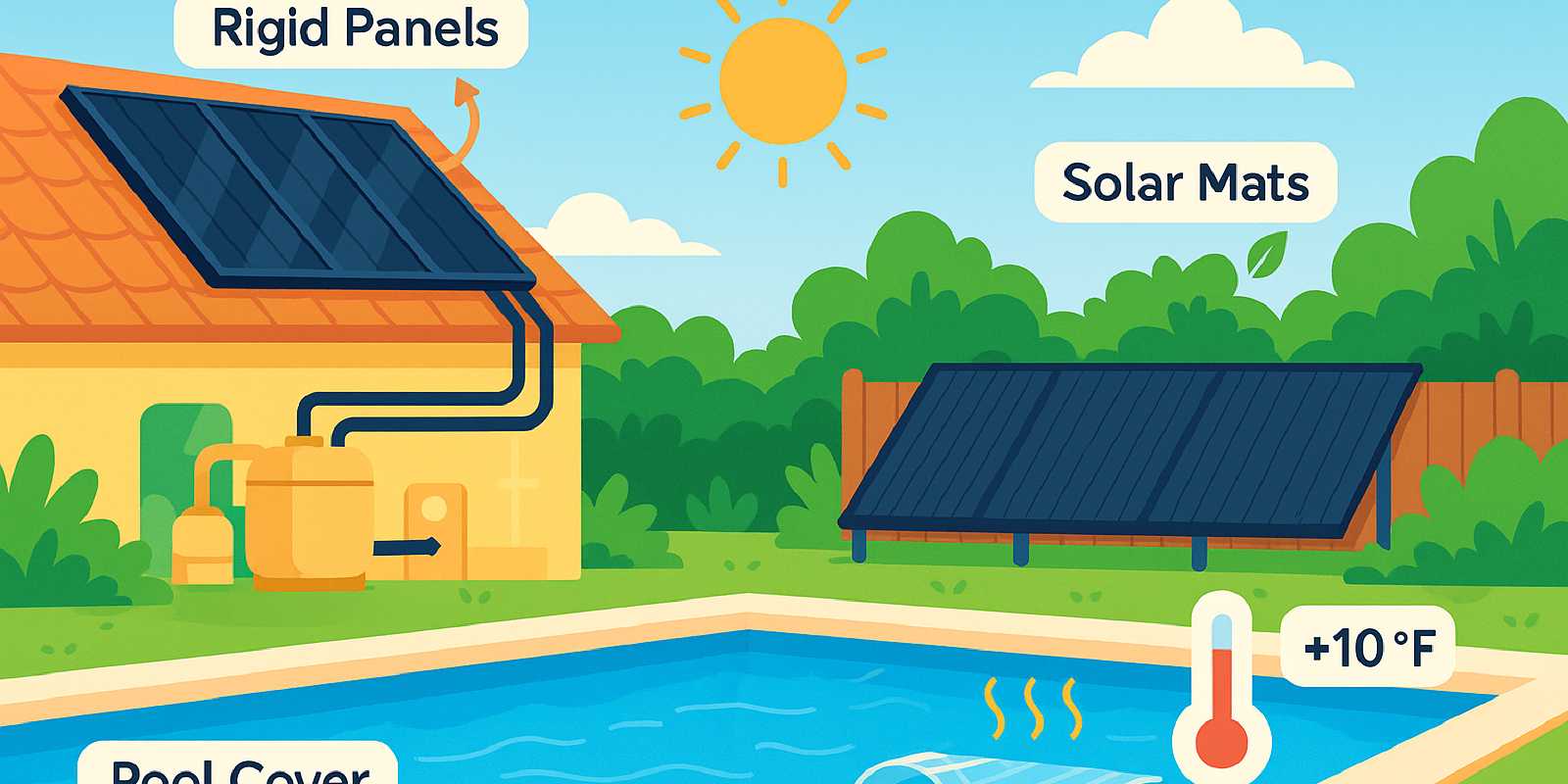
Imagine stepping into perfectly warm pool water in April—or still swimming comfortably in October—without watching your gas or electric bill skyrocket. A solar pool heating system makes that possible by capturing free energy from the sun to extend your swim season by months, all while slashing heating costs by up to 70%. Whether you’re weighing solar pool heat panels against solar pool heating mats, wondering how many square feet of collector you need, or simply trying to understand how solar pool water heating works, this guide delivers the practical depth and clear action steps you need to make the right choice for your backyard.
In the next 2,200 words, you’ll learn how solar pool collectors operate, compare rigid panels to flexible mats and covers, master the sizing formula that prevents under- or over-buying, navigate installation trade-offs, see real-world temperature gains by climate, calculate your payback timeline, and avoid the top five installation mistakes we see in the field. By the end, you’ll have a ready-to-use checklist and access to a free collector-area calculator so you can move confidently from research to installation.

☀️ How Does Solar Pool Heating Work?
A solar water heater for pools operates by diverting pool water through solar pool collectors mounted on a roof, fence, or nearby ground rack. The system is elegantly simple: a pump pushes water from your pool filter through the collectors, where sunlight warms it by 5–15°F, then returns the heated water to the pool. Unlike domestic solar water heaters that need glazing and insulation to hit high temperatures, pool collectors are typically unglazed—just rows of black polypropylene or EPDM tubing inside a manifold—because pools operate at lower target temperatures (78–82°F) and benefit from simpler, lower-cost designs.
The core components include:
- Solar pool collectors: Arrays of tubing that absorb sunlight and transfer heat to the flowing water.
- Pump: Usually your existing pool-filter pump, run during sunny hours to circulate water through the collectors.
- Diverter valve or controller: Automatically routes water to the collectors when the sun is strong and bypasses them at night or in clouds.
- Check valve: Prevents reverse flow and nighttime heat loss back through the collectors.
When the sun shines, a solar pool heater panel can raise water temperature by 1–2°F per pass; multiple passes throughout the day compound the effect. On a clear spring or fall day, a properly sized system can add 8–15°F to your pool over several sunny days, extending the comfortable swim season from the typical 6–7 months to 10–12 months in sunny climates like San Diego. In cooler regions, the extension may be 2–4 months, but the cost savings remain significant because you’re replacing expensive gas or electric heating with free solar energy.
Performance depends on three factors: collector area (more square footage captures more BTUs), solar exposure (unshaded south-facing installations perform best), and climate (sunny states outperform cloudy ones). The beauty of solar water heater for swimming pool technology is that it works passively once installed—no fuel, no emissions, minimal moving parts—and integrates seamlessly with your existing pool equipment.

🏊 Solar Pool Heating Systems: Panels vs Mats vs Covers
Choosing the right solar pool heating system starts with understanding the three main categories: rigid panels, flexible mats, and solar covers. Each has trade-offs in cost, efficiency, durability, and installation complexity.
Rigid Solar Pool Heat Panels
Rigid panels—typically 4×10 to 4×12 feet—are made from molded polypropylene or rubber with internal risers and headers. They mount permanently on roofs, racks, or fences and deliver the highest thermal efficiency and longest lifespan (15–20+ years). Top-tier panels like Technosolis achieve 70.1% efficiency at a temperature differential (ΔT) of 10°F and 61.1% at ΔT = 20°F, the operational range for most pool heating. Rigid panels handle chlorine and bromine without degradation, resist UV damage, and shed snow in winter climates.
Pros:
- ✅ Highest efficiency and durability
- ✅ Professional appearance; boosts home value
- ✅ Suitable for year-round use in freeze-protected systems
- ✅ Minimal maintenance beyond occasional rinsing
Cons:
- ❌ Higher upfront cost ($8–$12/sq. ft. installed in Sun Belt; $12–$16/sq. ft. in Northeast)
- ❌ Requires roof penetrations or sturdy mounting structure
- ❌ Professional installation recommended for warranties and leak-free integration
Flexible Solar Pool Heating Mats
Solar pool heating mats are blanket-like units made of woven or extruded polypropylene tubes, designed for portability and ease of use. They typically range from 2×10 feet to 4×20 feet and can be laid on a deck, roof, or ground near the pool. Mats are lightweight, DIY-friendly, and cost-effective ($3–$6/sq. ft. for kits), making them ideal for above-ground pools, budget-conscious buyers, or renters who want a temporary solution. However, they have a shorter lifespan (5–10 years) and slightly lower efficiency than rigid panels due to less robust construction and potential for uneven water distribution.
Pros:
- ✅ Low cost and fast DIY setup
- ✅ Portable; can be stored in winter or moved to new homes
- ✅ No roof work required
- ✅ Good for above-ground or small in-ground pools
Cons:
- ❌ Shorter lifespan; UV and chemical degradation over time
- ❌ Less efficient heat transfer; may need more area to match rigid panels
- ❌ Prone to wind damage if not secured
- ❌ Can be unsightly when sprawled on lawns or decks
Solar Pool Heater Covers (Solar Blankets)
A solar pool heater cover—also called a solar blanket—is a passive heating and insulation tool made of bubble-wrap-like plastic with UV inhibitors. Covers float on the pool surface, capturing direct solar gain and, more importantly, reducing evaporative heat loss (the biggest source of heat loss in pools). They typically add 5–10°F over a few sunny days and can cut heating costs by 50–70% when used alone or in combination with panels or mats.
Pros:
- ✅ Very low cost ($50–$300 depending on pool size)
- ✅ Reduces evaporation, water loss, and chemical use
- ✅ Complements solar collectors or gas/electric heaters
- ✅ Easy to deploy and remove with a reel
Cons:
- ❌ Labor-intensive daily on/off routine
- ❌ Limits pool aesthetics and spontaneous use
- ❌ Shorter lifespan (3–5 years); degrades in chlorine and UV
- ❌ Not a standalone heating solution in cool climates
Choosing the Right System
- Rigid panels for permanent, high-efficiency heating in sunny climates or for in-ground pools where long-term ROI matters.
- Mats for budget builds, above-ground pools, or DIY enthusiasts willing to trade some performance for simplicity.
- Covers as a low-cost supplement to any system or as a standalone option in mild climates with modest heating goals.
Many homeowners combine rigid panels or mats with a solar blanket to maximize both active heating and passive heat retention—a winning strategy for extending the swim season without inflating energy bills.

📏 Sizing Your Solar Pool Heating System Correctly
Proper sizing is the single most important factor for performance and satisfaction. Under-sizing leaves you with lukewarm water; over-sizing wastes money and roof space. The industry rule of thumb is to size solar pool collector area at 50% to 100% of your pool’s surface area to extend the swim season by roughly 3 months in temperate climates. For example, a 400 sq. ft. pool (20×20 feet) typically requires 200–400 sq. ft. of collectors.
Quick Sizing Formula
- Calculate pool surface area: Length × Width (for rectangular pools) or πr² (for round pools).
- Choose your target ratio:
- 50% for sunny, warm climates (e.g., Florida, Arizona) with modest season extension.
- 75% for temperate climates (e.g., California coast, Texas) aiming for 3–4 months extra.
- 100% for cooler climates (e.g., Pacific Northwest, Northeast) or year-round heating goals.
- Adjust for shade, wind, and pool usage: Add 10–20% if your site is partially shaded, highly exposed to wind, or if you keep the pool uncovered overnight.
Ready-to-Use Sizing Table
| Pool Size (sq. ft.) | 50% Ratio (sq. ft.) | 75% Ratio (sq. ft.) | 100% Ratio (sq. ft.) | Typical Panel Count (4×10 ft panels) |
|---|---|---|---|---|
| 300 | 150 | 225 | 300 | 4–8 |
| 400 | 200 | 300 | 400 | 5–10 |
| 600 | 300 | 450 | 600 | 8–15 |
BTU Considerations
Each square foot of unglazed collector in full sun delivers roughly 800–1,200 BTU/day depending on efficiency and temperature differential. A 400 sq. ft. pool losing ~30,000 BTU/day to evaporation and radiation needs collectors generating similar or higher BTUs to maintain or raise temperature. Use this as a sanity check: if your calculated collector area seems too small to offset your pool’s heat losses, increase the ratio.
Practical Sizing Tips
- Above-ground pools often need closer to 100% coverage because they lose heat faster through sidewalls.
- Covers and windbreaks reduce required collector area by 20–30% by cutting evaporative losses.
- Spa and hot tub heating requires dedicated solar options with higher temperature targets and often glazed collectors or heat exchangers.
For a precise, site-specific calculation, use a free online collector-area calculator that factors in your zip code’s solar resource, desired temperature, and pool characteristics. Many manufacturers and installers offer these tools; linking to a vetted calculator ensures you avoid guesswork and over- or under-investment.

🔧 Key Installation Factors: Roof Pitch, Plumbing & DIY vs Pro
Even the best-sized solar pool heating system will underperform if poorly installed. Success hinges on mounting location, plumbing quality, and knowing when to call a professional.
Mounting Location & Roof Pitch
South-facing roofs with 15–30° pitch are ideal in the Northern Hemisphere; east- or west-facing roofs work but reduce daily sun hours by 10–20%. Flat roofs require tilt racks to optimize angle. Ground or fence mounts are viable if roof space is limited, though they may need larger areas to compensate for suboptimal angles. Avoid shaded areas—even partial shade from trees or chimneys can cut efficiency by 30–50%.
Unglazed collectors are lightweight (~2–4 lbs/sq. ft.), so most roofs handle the load without reinforcement. However, verify that roof structure, flashing, and waterproofing can accommodate mounting hardware. Poor flashing is the #1 source of post-install leaks.
Plumbing & Hydraulics
Water must travel from the pool filter, up to the collectors, and back with minimal resistance. Use appropriately sized PVC or flexible hose (typically 1.5–2 inches diameter) to avoid flow restrictions. Install a check valve at the collector outlet to prevent reverse flow at night, and a diverter valve (manual or automatic) to bypass collectors in winter or during maintenance.
In freeze-prone regions, add draindown capability: a valve at the lowest point to empty collectors before winter or use glycol-based closed-loop systems if you plan year-round operation. Insulate any exposed pipes to minimize heat loss during transit.
DIY vs Professional Installation
DIY installations of mats or small panel kits can save 30–50% on total cost. Expect to spend a weekend cutting pipe, mounting panels, and testing for leaks. DIY pool heating kits include instructions, but you’ll need basic plumbing skills, a ladder, and comfort working on a roof. Budget $1,200–$2,800 for a 400 sq. ft. mat or panel kit in the Sun Belt, plus your labor.
Professional installation is recommended for rigid panel systems, complex plumbing runs, or if you lack roofing experience. Pros ensure proper flashing, optimal tilt, and code compliance. Installed costs range from $8–$12/sq. ft. in sunny states to $12–$16/sq. ft. in the Northeast, including labor, permits, and warranties. A typical 400 sq. ft. system costs $3,200–$6,400 installed.
Top 5 Installation Mistakes to Avoid
- Under-sizing collectors: Using 30% coverage when 75% is needed leaves water tepid.
- Poor roof flashing: Causes leaks, water damage, and costly repairs.
- No check valve: Allows nighttime heat loss; pool temperature drops by morning.
- Incorrect tilt or orientation: Misaligned panels lose 20–40% efficiency.
- Skipping draindown in freeze climates: Frozen collectors crack and fail; replacement costs hundreds to thousands.
Work with SRCC-certified installers when possible; certification signals adherence to industry best practices and qualifies you for rebates in many regions.

🌡️ Extending Your Swim Season: Performance by Climate
The real value of a solar water heater for pools is measured in extra swim days and reduced bills. Field studies from 2022–2025 show that solar pool heating typically delivers 8–15°F temperature gains in sunny climates, extending usable swim seasons from 6–7 months to 10–12 months.
Performance by Region
Sun Belt (California, Arizona, Texas, Florida):
- Temperature gain: 8–15°F over ambient pool temperatures on clear days.
- Season extension: 3–5 months; some homeowners swim year-round.
- Daily BTU delivery: 800–1,200 BTU/sq. ft. of collector.
- Example: A San Diego case study showed pools heated to 82°F in April and maintained through November, compared to June–September without solar.
Temperate Climates (Mid-Atlantic, Pacific Northwest, Northern California):
- Temperature gain: 5–10°F; season extension of 2–3 months.
- Challenge: Lower sun hours and cooler ambient temperatures limit gains.
- Solution: Use 75–100% collector coverage and combine with solar blankets to retain heat overnight.
Cold Climates (Northeast, Mountain West):
- Temperature gain: 3–8°F; season extension of 1–2 months.
- Best practice: Deploy glazed or evacuated tube collectors for higher efficiency in cold/cloudy weather, or pair unglazed collectors with a heat pump for hybrid heating.
- Winter strategy: Drain collectors or use freeze-protected closed-loop systems.
Operational Temperature Differentials
Most solar pool collectors operate efficiently at ΔT = 10–20°F (the difference between pool water and ambient air). Performance testing shows top-tier panels maintain 60–70% efficiency within this range. Beyond ΔT = 30°F, efficiency drops sharply, which is why solar works best for pools (target 78–82°F) and not for high-temperature domestic hot water without glazing.
Realistic Expectations
- Spring/fall shoulder seasons: Solar excels, adding weeks of comfortable swimming before and after the peak summer.
- Summer: Maintains temperature with minimal backup; some systems require venting or covers to prevent overheating.
- Winter: Limited gains in cold regions; drain or rely on backup heating unless using a hybrid system.
Combining solar panels with a solar pool heater cover is a force multiplier: the cover reduces evaporative losses (often 70% of total heat loss), while panels actively add heat during the day. This combination can double your season extension compared to either alone.

💰 Upfront Cost, Energy Savings & Payback Timeline
Understanding the economics of solar hot water heater for pool systems helps you weigh the initial investment against long-term savings and environmental benefits.
Upfront Costs (2024 Data)
- DIY kits (mats or small panel systems):
- Sun Belt: $3–$6/sq. ft. → $1,200–$2,400 for a 400 sq. ft. system.
- Northeast: $4–$7/sq. ft. → $1,600–$2,800 for a 400 sq. ft. system.
- Professional installation (rigid panels):
- Sun Belt: $8–$12/sq. ft. → $3,200–$4,800 installed for 400 sq. ft.
- Northeast: $12–$16/sq. ft. → $4,800–$6,400 installed for 400 sq. ft.
- Solar covers: $50–$300 depending on pool size; add-on cost if paired with panels.
Energy Savings
Solar pool heating can reduce heating costs by 50–80% compared to gas or electric heaters. The exact savings depend on your current heating fuel, pool size, and climate.
Example comparison (400 sq. ft. pool, temperate climate, 6-month season):
| Heating Method | Annual Cost | 10-Year Cost | Upfront Cost | 10-Year Total |
|---|---|---|---|---|
| Natural gas | $800–$1,200 | $8,000–$12,000 | $2,000 | $10,000–$14,000 |
| Electric resistance | $1,200–$1,800 | $12,000–$18,000 | $1,500 | $13,500–$19,500 |
| Heat pump | $400–$600 | $4,000–$6,000 | $3,500 | $7,500–$9,500 |
| Solar (installed) | $50–$150 | $500–$1,500 | $4,000–$5,000 | $4,500–$6,500 |
Solar delivers the lowest 10-year total cost and insulates you from rising fuel prices. A 2025 industry guide projects 25-year savings of $41,000–$60,000 for properly sized systems in sunny climates.
Payback Timeline
- Sun Belt: 2–5 years (faster with high gas/electric rates or frequent pool use).
- Temperate climates: 4–7 years.
- Cold climates: 7–10 years (longer due to lower solar fraction; hybrid systems improve economics).
Factors shortening payback:
- High baseline heating costs.
- Large collector area and long swim season.
- Incentives and rebates (check local utility and state programs).
- DIY installation (cuts upfront cost in half).
Environmental & Resale Benefits
A 400 sq. ft. solar pool heating system offsets roughly 1.5–2.5 tons of CO₂ per year compared to gas heating, totaling 30–50+ tons over a 20-year lifespan. Solar systems also add modest home value and appeal to eco-conscious buyers, though ROI from resale varies by market.
🛠️ Maintenance & Troubleshooting Tips
One of the strongest selling points of solar pool water heating is low maintenance. Unglazed collectors have no moving parts in the panels themselves, and routine care takes just minutes per season.
Annual Maintenance Checklist
- Inspect collectors: Look for cracks, UV damage, or leaks. Rinse panels with a hose to remove dust, pollen, and debris that block sunlight.
- Check valves and fittings: Ensure diverter valves operate smoothly; tighten any loose connections; verify check valves prevent reverse flow.
- Test pump and controller: Run the system on a sunny day to confirm the pump circulates water and the controller activates/deactivates correctly.
- Winterize (freeze climates): Drain collectors completely or confirm glycol concentration if using a closed-loop system. Cover or disconnect panels if not in use.
- Trim shading: Cut back tree branches or vegetation that cast shadows on collectors.
Common Issues & Fixes
Problem: Pool not warming as expected
- Cause: Dirty collectors, undersized array, pump running at night, or extended cloudy weather.
- Fix: Clean panels, verify collector area matches pool size, adjust controller settings to run only during sunny hours, and consider adding more panels or a solar blanket.
Problem: Leaks at fittings or manifold
- Cause: UV degradation, thermal expansion/contraction, or improper installation.
- Fix: Replace damaged fittings or panels; use UV-rated PVC glue and hose clamps; apply silicone sealant to minor cracks as a temporary fix.
Problem: Frozen or cracked collectors
- Cause: Water left in panels during a freeze.
- Fix: Replace damaged panels; install draindown valves or convert to a glycol system for future winters.
Problem: Overheating in summer
- Cause: Excess collector area or low pool usage.
- Fix: Cover collectors with tarps on very hot days, add a bypass valve to divert water, or simply enjoy warmer water and reduce backup heating.
For more advanced troubleshooting, see our troubleshooting guide covering pumps, controllers, and sensors.
Professional Servicing
Most systems require professional attention only every 3–5 years for pump replacement, valve servicing, or glycol testing in closed-loop setups. Quality collectors last 15–25 years, and pumps/controllers typically run 10–15 years before needing replacement. This longevity—combined with minimal upkeep—makes solar pool heating one of the lowest-maintenance renewable energy technologies.

✅ Solar Pool Heating Checklist & Action Plan
Ready to take the plunge? Use this step-by-step checklist to move from research to warm, sunny swim days.
1. Assess Your Pool & Goals
- Measure pool surface area (length × width).
- Define your target swim season (e.g., April–October vs June–September).
- Identify current heating costs and fuel type (gas, electric, or none).
2. Calculate Required Collector Area
- Use the 50–100% rule based on your climate and goals.
- Account for shading, wind exposure, and pool cover use.
- Run numbers through a free collector-area calculator for precision.
3. Choose Your System Type
- Rigid panels for long-term efficiency and aesthetics.
- Mats for budget builds and portability.
- Covers as a standalone or supplement.
4. Evaluate Installation Options
- DIY if you’re handy and comfortable on roofs; budget $1,200–$2,800 for kits.
- Hire a pro for complex installs or to ensure warranties and code compliance; budget $3,200–$6,400 installed.
5. Check Incentives & Financing
- Search for local utility rebates, state credits, and federal tax incentives (currently limited for pool heating but check eligibility).
- Explore low-interest green home improvement loans.
6. Select a Qualified Installer or Kit
- Look for SRCC-certified products and installers.
- Request quotes from 3+ contractors; compare warranties, references, and experience.
- Read reviews and verify licensing.
7. Plan Installation Logistics
- Schedule during dry, mild weather.
- Confirm roof access, electrical permits (if needed), and pool shutdown windows.
- Coordinate delivery and staging of panels or mats.
8. Commission & Test the System
- Verify proper flow, no leaks, and controller operation on a sunny day.
- Measure baseline pool temperature and track daily gains.
- Adjust valves and timers as needed.
9. Establish a Maintenance Routine
- Set annual reminders to inspect, clean, and winterize.
- Keep a log of temperature readings and system performance.
10. Enjoy & Monitor Savings
- Track energy bills before and after installation.
- Celebrate extra swim weeks and reduced carbon footprint.
Next Steps:
- Use our free collector-area calculator to confirm sizing and estimate costs.
- Request quotes from vetted solar pool heating installers in your area through our installer network.

❓ Frequently Asked Questions
Can solar pool heating work in cloudy climates?
Yes, but performance drops. Expect 3–8°F gains instead of 8–15°F. Use larger collector arrays (75–100% of pool area) and pair with solar covers. Evacuated tube collectors improve efficiency in cold/cloudy conditions.
How long does a solar pool heater panel last?
Quality rigid panels last 15–25 years; flexible mats last 5–10 years. Lifespan depends on UV exposure, chemical balance, and maintenance. Regular cleaning and winter draining extend life.
Do I need a backup heater with solar?
In most climates, yes. Solar covers 50–80% of heating needs; a gas or electric backup handles cloudy stretches and early/late season cold snaps. Many homeowners run backup only a few weeks per year.
What’s the difference between a solar pool heater and a solar water heater for the house?
Pool heaters use unglazed, low-temperature collectors because pools operate at 78–82°F. Domestic solar water heaters need glazed or evacuated tube collectors to reach 120–160°F for showers and appliances.
How much roof space do I need for a 400 sq. ft. pool?
With 75% sizing, you need 300 sq. ft. of collector area. Standard 4×10 ft panels cover 40 sq. ft. each, so you’d need 7–8 panels. That fits on most single-story roofs or can be split between roof/fence/ground mounts.
Can I install solar pool heating myself?
Yes, especially with flexible mats or small panel kits. DIY kits include instructions and save 30–50% on labor. Rigid panel systems are more complex and may require professional help for flashing, plumbing, and code compliance.
What’s the ROI on solar pool heating?
Typical payback is 2–7 years depending on climate, heating costs, and system size. Over 10 years, solar saves $3,500–$12,000 compared to gas or electric heating. Over 25 years, savings can exceed $40,000.
Do solar pool heaters require permits?
Often yes, especially for roof-mounted rigid panels. Electrical, plumbing, and building permits vary by jurisdiction. Professional installers handle permitting; DIY builders should check local codes.
How do I prevent freezing damage?
In freeze-prone climates, drain collectors before winter or use a closed-loop glycol system. Install draindown valves at low points and blow out lines with compressed air. Cold-climate strategies detail freeze protection methods.
Can I use solar heating for a spa or hot tub?
Yes, but unglazed collectors struggle to reach spa temperatures (100–104°F). Use glazed collectors or hybrid systems that preheat water before a gas or electric booster heats it to spa levels.