Sheds & Garages: Safe, Effective Solar Heating Options
 Nov 22, 2025

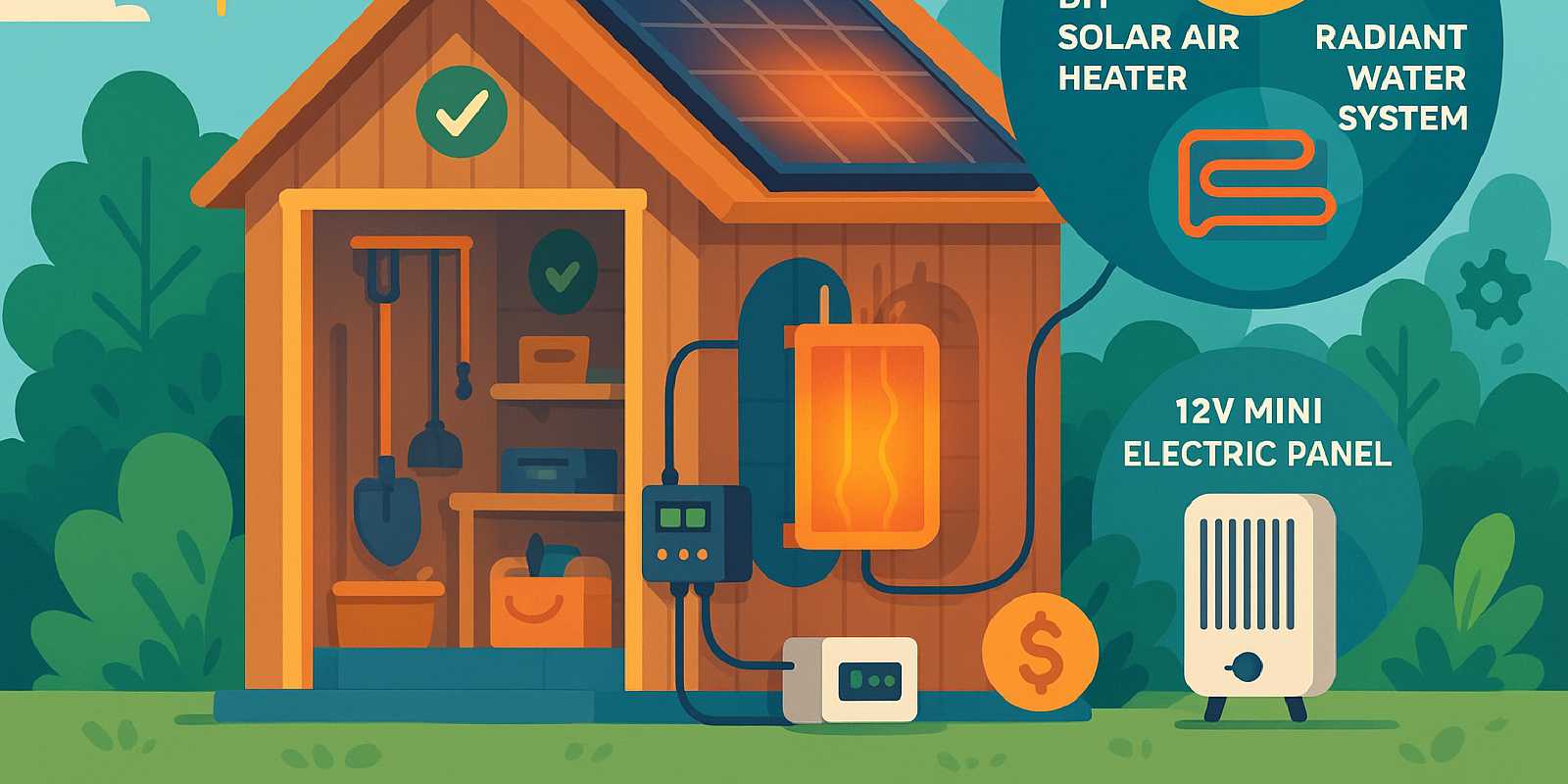
Keeping a shed, garage, or workshop warm enough to use year-round can be expensive—especially if you’re relying on traditional electric or propane heaters. Solar heating offers a compelling alternative: harness free sunlight to cut your energy bills, reduce your carbon footprint, and extend the usability of detached outbuildings without running high-cost power lines or venting combustion gases. Whether you need a solar powered heater for shed use, a solar powered garage heater for weekend projects, or even a solar powered heater for dog house comfort, this guide walks you through the technology, sizing, costs, installation, and safety considerations to help you choose and deploy the right system.
In this article, you’ll discover how solar heating works for small structures, compare the three main heater types (air collectors, radiant water loops, and mini electric panels), size your system accurately, understand upfront costs and tax credits, decide between DIY kits and professional installation, meet code and fire-safety requirements, and maintain your setup for years of reliable warmth. By the end, you’ll have a clear roadmap to transform your cold outbuilding into a comfortable, energy-efficient space.

☀️ Why Switch to Solar Heat in Sheds & Garages?
Detached structures often sit idle in winter because heating them with grid electricity or fossil fuels is prohibitively expensive. A solar heater for shed or garage eliminates recurring fuel costs by capturing sunlight directly as heat. Here’s why solar makes sense for outbuildings:
Energy Savings and Operating Cost:
- Solar heating can reduce or eliminate the energy bill for your shed or garage. Once installed, sunlight is free—no monthly propane deliveries, no electric meter spinning. Active systems with pumps consume minimal electricity (typically 50–150 W), and passive air heaters use none at all.
- For a typical insulated shed requiring about 10–15 BTU/hr per sq ft, a properly sized solar panel heater for shed can supply the majority of heating needs on sunny days, leaving backup heat for cloudy periods or nights.
Environmental and Emissions Benefits:
- Switching to solar heat avoids burning fossil fuels. Over a 20-year lifespan, a small solar heating system can offset several tons of CO₂ emissions compared to electric resistance or propane heaters, aligning with sustainability goals for green living enthusiasts.
- Solar thermal collectors convert 40–70% of incident sunlight into useful heat—far more efficient than generating electricity with PV panels and then using it for resistance heating.
Resilience and Energy Independence:
- Solar heating systems—especially passive types—continue to work during power outages, making them ideal for off-grid cabins, prepper setups, or rural workshops. A solar powered shed heater with battery backup or thermosiphon operation provides warmth when grid power is down.
- You hedge against rising utility rates; once the system pays for itself, you enjoy essentially free heat for the remainder of its 20–30 year life.
Improved Usability of Your Space:
- A warm garage or shed becomes a year-round workshop, hobby space, or storage area for temperature-sensitive tools and equipment. Prevent freezing pipes, protect paint and finishes, and work comfortably even in winter.
- For pet owners, a solar powered heater for dog house or kennel ensures your animals stay safe and cozy without expensive electric heat lamps.
Property Value and Green Appeal:
- Installing solar heating demonstrates a commitment to sustainability and energy efficiency, potentially boosting resale value and appealing to eco-conscious buyers.
- Integrated solar systems add a modern, forward-thinking feature to your property.
Realistic Performance Expectations:
- Solar heating excels during the day and in sunny climates. In cold U.S. regions, well-designed systems (especially evacuated tube collectors or well-insulated air heaters) can raise shed temperatures by 15–30°F per hour under good sun conditions, according to recent field data from the U.S. Department of Energy and National Renewable Energy Laboratory (NREL).
- For winter or cloudy days, you’ll typically integrate backup electric or propane heat. Solar often supplies 50–80% of total heating needs over a season in sunny states like Arizona, California, Florida, and Texas—your target markets.
By choosing solar, you transform a cold, underutilized outbuilding into a functional, cost-effective space while contributing to a cleaner energy future.

🔧 How a Solar Powered Heater for Shed or Garage Works
Understanding the basic operation of solar heating systems helps you choose the right technology and troubleshoot performance issues. All solar heaters share a common principle: capture sunlight, convert it to heat, and transfer that heat to your space or a storage medium.
Core Components and Operation
1. Solar Collector (Heat Absorber):
- The collector is the heart of the system. It’s typically mounted on a south-facing roof, wall, or nearby ground stand to maximize sun exposure.
- Air collectors use a black absorber plate behind glazing (glass or polycarbonate). Sunlight heats the plate, warming air that flows over it. Air is then ducted into the shed or garage by natural convection (passive) or a small fan (active).
- Water-based (hydronic) collectors heat a fluid—either potable water in direct systems or a glycol-antifreeze mix in indirect systems. The heated fluid circulates through a coil or radiator inside the building, releasing warmth.
- Mini electric panels powered by small PV modules convert sunlight to electricity, which drives a low-wattage electric resistance heater or ceramic panel. These are simple and modular but less efficient than direct thermal collectors.
2. Heat Transfer and Distribution:
- Passive systems rely on gravity and natural airflow. For example, a thermosiphon air heater pulls cool air from the bottom of the shed, heats it in the collector, and returns warm air to the top—no pumps or fans required. Passive systems are ultra-reliable and work during power outages.
- Active systems use a small pump (hydronic) or fan (air) controlled by a thermostat or differential controller. When the collector is warmer than the space or storage tank, the controller activates circulation. Active systems deliver more heat and allow flexible placement of collectors and heat exchangers.
3. Heat Storage (Optional but Common):
- Many systems integrate thermal mass—such as a water tank, concrete floor, or phase-change materials—to store heat collected during sunny hours for release at night or on cloudy days.
- For solar rooftop water heater systems adapted to space heating, a hot water storage tank can supply both domestic hot water and radiant floor/baseboard heating via a heat exchanger.
4. Backup Heat Integration:
- Because solar output varies with weather, nearly all practical installations include a backup heater (electric, propane, or wood). The backup kicks in automatically when solar can’t maintain your target temperature.
- Smart controllers allow you to prioritize solar, using backup only when necessary, maximizing savings.
Typical Heat Output
- A well-designed small solar powered heater for an 80–400 sq ft shed can deliver 5,000–15,000 BTU/day on clear winter days, depending on collector size and sun hours. In summer, output can double.
- For reference, raising a 200 sq ft insulated shed by 20°F requires roughly 2,000–3,000 BTU/hr continuously. A 4×8 ft flat-plate air collector can supply that on a sunny day, with backup covering nights and clouds.
Air vs Water: Which Medium?
- Air-based systems are simpler, cheaper, and work well for direct space heating. No freeze protection needed. Ideal for DIY solar air heater kits.
- Water-based systems store more heat per volume and can supply both space heating and domestic hot water. They’re more complex and require freeze protection (glycol or drainback) but offer higher efficiency and flexibility, especially for radiant floor heating in garages.
Real-World Integration
Many homeowners pair a solar powered garage heater with existing electric baseboard heaters or a propane space heater, using solar to preheat the space and reduce runtime of the backup. This hybrid approach balances reliability with cost savings.
For more foundational knowledge on how solar thermal systems work, including collectors, tanks, and heat transfer principles, see our comprehensive guide on solar water heating basics.

📊 Comparing Solar Heater Types: Air Collectors, Radiant Water & Mini Electric Panels
Choosing the right solar heater type depends on your shed size, insulation, budget, and DIY skills. Here’s a detailed comparison of the three main options:
| Feature | DIY Solar Air Heater Kits | Radiant Water (Hydronic) Kits | 12 V Mini Electric Panel Heaters |
|---|---|---|---|
| Cost | $100–$600 | $2,000–$6,000 | $50–$500 |
| Heat Output | 5,000–12,000 BTU/day | 10,000–45,000 BTU/day | 500–2,000 BTU/hr |
| Complexity | Low (DIY-friendly) | Moderate–High | Very Low |
| Freeze Protection | Not needed | Required (glycol or drainback) | Not needed |
| Best Use | Direct space heating, small sheds | Larger garages, radiant floors | Supplemental heat, off-grid |
| Efficiency | 40–60% sun-to-heat | 50–70% sun-to-heat | 18–22% sun-to-heat |
| Maintenance | Minimal | Periodic (pump, glycol, tank) | Minimal |
DIY Solar Air Heater Kits
How They Work:
- Air heaters use a glazed box with a black absorber plate (often corrugated metal or aluminum cans) to heat air. Cool air enters at the bottom, warms as it rises across the plate, and exits at the top into your shed.
- Passive designs rely on convection; active versions add a small fan (often solar-powered) for faster circulation.
Pros:
- ✅ Low cost: $100–$300 for basic kits; advanced kits with fans and controls run $400–$600.
- ✅ Simple DIY installation with minimal tools; no plumbing or freeze concerns.
- ✅ Works during power outages (passive models).
- ✅ Ideal for small sheds (80–200 sq ft).
Cons:
- ❌ Lower heat capacity per square foot compared to water systems.
- ❌ Heat stops when the sun sets; minimal storage unless paired with thermal mass.
- ❌ Ductwork and air leaks can reduce efficiency.
Performance:
- Expect temperature rises of 15–25°F per hour in good sun. A 4×8 ft collector can heat a 150 sq ft shed noticeably on clear winter days.
Best For: DIY enthusiasts, budget-conscious renovators, and small, well-insulated sheds where simplicity and low upfront cost are priorities.
Radiant Water (Hydronic) Kits
How They Work:
- A solar rooftop water heater with flat-plate or evacuated tube collectors heats water or glycol, which circulates through a heat exchanger, radiant floor loops, or baseboard radiators inside the garage.
- Active systems use a pump and controller; indirect systems use a heat exchanger to protect potable water from antifreeze.
Pros:
- ✅ High heat capacity and efficiency (50–70% sun-to-heat).
- ✅ Stores heat in a tank for evening/cloudy use.
- ✅ Can supply both space heating and domestic hot water.
- ✅ Excellent for larger garages (200–400 sq ft) and cold climates.
Cons:
- ❌ Higher upfront cost: $2,000–$6,000 installed.
- ❌ More complex installation; professional help often recommended.
- ❌ Requires freeze protection (glycol or drainback).
- ❌ Ongoing maintenance: pump, controller, and periodic glycol replacement.
Performance:
- A 200 L (53 gal) solar water heater kit with two collectors can supply 10,000–20,000 BTU/day in winter, enough to significantly reduce backup heating in a well-insulated garage.
Best For: Larger garages, workshops requiring consistent heat, or homeowners integrating space heating with domestic hot water. See our guide on radiant hydronic systems for more.
12 V Mini Electric Panel Heaters
How They Work:
- Small 12 V mini electric heaters powered by a solar battery bank or directly by a PV module. These are typically ceramic or resistance panels delivering 50–500 W.
Pros:
- ✅ Very low cost: $50–$200 per unit.
- ✅ Ultra-simple installation; plug-and-play with solar batteries.
- ✅ Portable and modular; add more units as needed.
- ✅ Ideal for small, confined spaces like dog houses or tiny sheds.
Cons:
- ❌ Low heat output (500–2,000 BTU/hr); suitable only for supplemental or target-zone heating.
- ❌ Poor efficiency compared to direct thermal collectors.
- ❌ Requires battery storage or PV panel; dependent on sun for electricity.
Performance:
- A 200 W mini heater running for 5 hours delivers about 3,400 BTU—enough to take the chill off a small, insulated dog house or provide spot warmth in a shed corner.
Best For: Off-grid setups, emergency backup, small enclosures, or supplemental heat in already-warmed spaces. Think mini solar heater for targeted warmth rather than whole-building heating.
Which Type Should You Choose?
- Small shed (80–150 sq ft), tight budget, DIY skills: Choose a solar air heater kit.
- Larger garage (200–400 sq ft), need reliable heat storage, willing to invest: Choose a radiant water (hydronic) system.
- Tiny space (dog house, small corner), off-grid, minimal heat need: Choose a 12 V mini electric panel heater.
For a comprehensive comparison of active vs passive solar heating approaches, review our passive vs active solar water heating guide.

📐 Sizing & Design Checklist for Small Solar Powered Heaters
Proper sizing ensures your solar powered patio heater or garage system delivers adequate warmth without wasting money on oversized equipment. Follow this step-by-step checklist:
Step 1: Calculate Your Heat Load
Insulated Sheds:
- Target: 10–15 BTU/hr per sq ft.
- Example: A 200 sq ft insulated shed needs 2,000–3,000 BTU/hr to maintain comfort.
Uninsulated Sheds:
- Target: 20–30 BTU/hr per sq ft.
- Example: A 200 sq ft uninsulated shed needs 4,000–6,000 BTU/hr.
Why Insulation Matters: Insulation reduces heat loss through walls, roof, and floor. Investing in R-13 or better wall insulation and R-30 roof insulation can cut your heating requirement by 50% or more, making a smaller, cheaper solar system viable.
Step 2: Estimate Your Collector Size
Rule of Thumb:
- For direct space heating, target 0.5–1.0 sq ft of collector area per sq ft of floor area in sunny climates.
- For cold/cloudy climates, aim for 1.0–1.5 sq ft of collector per sq ft of floor.
Example:
- A 150 sq ft insulated shed in California might need 75–150 sq ft of collector area, achievable with two 4×8 ft panels (64 sq ft total) plus backup heat.
Step 3: Account for Local Sun Hours
Peak Sun Hours:
- Sunny states (AZ, CA, FL, TX) average 5–7 peak sun hours per day in winter.
- Cloudy regions drop to 2–4 peak hours.
Heat Output Formula:
- Collector BTU/day ≈ (Collector Area in sq ft) × (Efficiency %) × (Peak Sun Hours) × 317 BTU/sq ft/hr (solar constant).
- Example: A 64 sq ft collector at 50% efficiency with 5 peak hours yields ~50,880 BTU/day, enough to significantly heat a 150 sq ft shed during daylight.
Step 4: Choose System Type Based on Demand
Air Heater:
- Suitable for smaller sheds (80–200 sq ft) with daytime-only heating needs.
- Add thermal mass (water barrels, concrete floor) to extend warmth into the evening.
Hydronic Radiant:
- Best for larger garages (200–400 sq ft) or buildings needing evening heat.
- A 200 L (53 gal) solar tank stores 60,000–100,000 BTU, covering several hours of heating after sunset.
Mini Electric Panel:
- Supplement primary heating or provide spot warmth in corners. Not a standalone solution for whole-building heating.
Step 5: Factor in Backup Heat
- Solar rarely meets 100% of heating demand. Size your backup heater to cover the full load on cloudy days and at night.
- A hybrid approach (solar primary, electric or propane backup) balances cost and reliability.
Step 6: Orientation and Tilt
- South-facing collectors capture the most sun in the Northern Hemisphere.
- Tilt angle: Set to your latitude for year-round average, or latitude + 15° for better winter performance.
- Avoid shading from trees, buildings, or overhangs during peak sun hours (9 AM–3 PM).
Step 7: Verify Structural Support
- Roof-mounted collectors add weight (flat-plates: ~3–5 lb/sq ft; evacuated tubes: lighter but bulkier).
- Ensure your shed or garage roof can support the load plus snow/wind forces. Consult a structural engineer if unsure.
Quick Example: 200 Sq Ft Insulated Shed in Arizona
- Heat load: 200 sq ft × 12 BTU/hr/sq ft = 2,400 BTU/hr.
- Collector size: 200 sq ft × 0.75 = 150 sq ft collector (two 4×10 ft panels).
- Peak sun hours: 6 hours/day average.
- Daily heat output: 150 × 0.5 × 6 × 317 ≈ 142,650 BTU/day—far exceeds daily need, so downsize to one 4×10 panel (~40 sq ft) and rely on backup at night.
Proper sizing prevents over-investment and ensures reliable comfort. For cold-climate tips, see our cold climate playbook.

💰 Upfront Cost, Tax Credits and Long-Term Savings
Solar heating requires an initial investment, but federal and state incentives, combined with long-term energy savings, often deliver compelling returns. Here’s a breakdown of costs, available incentives, and a simple ROI calculation.
Upfront Costs by System Type
DIY Solar Air Heater Kits:
- Materials: $100–$600 depending on size and quality.
- Labor: Owner-installed (free) or $200–$500 for professional help.
- Total DIY cost: $100–$800.
Radiant Water (Hydronic) Kits:
- Materials: $1,000–$3,000 (collectors, tank, pump, controls, plumbing).
- Labor: $1,000–$3,000 for professional installation.
- Total installed cost: $2,000–$6,000.
12 V Mini Electric Panel Heaters:
- Materials: $50–$200 per heater.
- Labor: DIY or minimal electrician help ($100–$300).
- Total cost: $50–$500.
Federal Incentives (United States)
Residential Clean Energy Credit (ITC):
- 30% federal tax credit on total installed cost of solar thermal systems through 2032.
- Applies to solar water heaters and space heating systems that are SRCC-certified (OG-300 or OG-100) and supply at least 50% of heating energy from solar.
- Example: A $5,000 hydronic system yields a $1,500 federal credit, reducing net cost to $3,500.
- Claim via IRS Form 5695; unused credits carry forward.
- Pools excluded, but shed and garage heating qualifies if the system meets certification standards.
Source: U.S. Department of Energy
State and Local Incentives (2024–2025)
Arizona:
- Residential Solar Tax Credit: Up to 25% of system cost, capped around $1,000–$1,500.
- Utility rebates (APS, SRP): Additional rebates for solar thermal systems if metered or integral to the home.
California:
- Self-Generation Incentive Program (SGIP): Rebates for solar water heating and storage.
- California Solar Initiative – Thermal Program: Upfront rebates for residential solar hot water; outbuildings qualify if serving the home.
Florida:
- Residential Solar Tax Credit: 30% state tax credit on solar water heating systems.
- Utility rebates (FPL, Duke Energy): Some rebates available for solar thermal.
Texas:
- Limited state incentives, but Austin Energy and CPS Energy offer rebates for solar water heaters.
- Federal ITC is the primary benefit.
Source: Database of State Incentives for Renewables & Efficiency (DSIRE)
Important Note on Detached Outbuildings: Most incentives require the solar system to serve the primary residence. If your shed or garage heating is plumbed to the home’s hot water system or integrated as part of the home’s heating infrastructure, it likely qualifies. Purely standalone outbuilding systems may be ineligible for some programs—verify with your local program administrator or installer.
Long-Term Savings and Payback
Annual Savings Example:
- An insulated 200 sq ft garage in California uses an electric space heater consuming 1,500 kWh/year (~$300/year at $0.20/kWh).
- A $4,000 hydronic solar system (net $2,800 after 30% federal credit) supplies 70% of heat, saving ~$210/year.
- Simple payback: $2,800 ÷ $210 = 13.3 years.
- With additional state rebates ($500–$1,000), payback drops to 8–11 years.
Lifetime Value:
- Solar collectors last 20–30+ years with minimal maintenance.
- After payback, you enjoy essentially free heat for 10–20 years, accumulating thousands in net savings.
- Rising electricity and gas rates accelerate savings over time.
Quick ROI Formula
- Net system cost = (Total installed cost) − (Federal credit) − (State/local rebates).
- Annual savings = (Backup energy cost) × (Solar fraction %).
- Payback years = Net cost ÷ Annual savings.
Example:
- Total cost: $5,000
- Federal credit (30%): −$1,500
- State rebate: −$500
- Net cost: $3,000
- Annual savings: $250
- Payback: 12 years
For a deeper dive into solar water heater costs and payback examples across climates, see our 2025 cost guide.
Financial Tips
- Combine solar with insulation upgrades to reduce heating load and improve ROI.
- Shop around for installers and get at least three quotes for professional systems.
- Consider DIY kits if you’re handy; labor savings can cut total cost in half.
- Monitor incentive deadlines and apply early—some programs have limited funds.
Solar heating for sheds and garages offers a solid financial return in sunny states with strong incentives, especially if you’re already investing in insulation and efficiency upgrades.

🔨 Installation Approaches: DIY Kits vs Professional Setup
Deciding between DIY and professional installation depends on your budget, skills, and system complexity. Here’s what to expect from each approach.
DIY Solar Air Heater Kits
Who It’s For:
- Handy homeowners comfortable with basic carpentry, drilling, and sealing.
- Tight budgets prioritizing labor savings.
- Simple passive or small active air heaters.
Typical DIY Process:
- Assemble the collector: Build or purchase a glazed box with a black absorber plate (corrugated metal, aluminum cans, or commercial panels).
- Mount the collector: Attach to a south-facing wall or roof using flashing and sealant to prevent leaks.
- Duct the airflow: Cut intake and outlet holes in the shed wall; install ducts (often insulated flex duct or rigid PVC). Passive systems rely on natural convection; active systems add a small fan wired to a thermostat or solar PV module.
- Seal and insulate: Weatherproof all penetrations; insulate ducts to minimize heat loss.
- Test operation: On a sunny day, verify warm air flows into the shed and temperatures rise as expected.
Pros:
- ✅ Low cost (materials only: $100–$600).
- ✅ Flexible design tailored to your space.
- ✅ Great learning experience and satisfaction.
- ✅ No complex plumbing or electrical work.
Cons:
- ❌ Time-intensive (one or two weekends).
- ❌ Performance depends on build quality; air leaks reduce efficiency.
- ❌ Limited warranty or support compared to commercial kits.
Recommended Kits:
- Heliatos DIY Solar Air Heater Kit (modular panels, clear instructions).
- DIY solar air heater components (glazing, absorber plates, fans).
For step-by-step DIY project guidance, see our DIY solar hot water kits guide.
DIY Radiant Water Kits
Who It’s For:
- Experienced DIYers with plumbing and basic HVAC skills.
- Willingness to invest time and effort for higher performance.
- Moderate budgets ($1,500–$3,000 materials).
Typical DIY Process:
- Mount collectors: Install flat-plate or evacuated tube collectors on the roof with proper flashing.
- Plumb the loop: Run insulated supply and return lines from the collectors to a storage tank or heat exchanger inside the garage. Use glycol for freeze protection in cold climates.
- Install pump and controller: Wire a small circulating pump (120V or PV-powered) and differential controller with sensors on the collector and tank.
- Fill and pressurize: Charge the system with glycol mix (~20–30 psi); purge air from lines.
- Integrate backup heat: Connect the solar tank to your existing electric or propane heater as a preheat stage.
- Commission and test: Verify pump operation, leak-check all fittings, and monitor temperatures.
Pros:
- ✅ High efficiency and heat storage.
- ✅ Can supply both space heating and hot water.
- ✅ Labor savings vs professional install ($1,000–$3,000).
Cons:
- ❌ Complex installation requiring plumbing, roofing, and electrical skills.
- ❌ Risk of leaks or improper glycol mix if done incorrectly.
- ❌ May not meet code without licensed sign-off.
Recommended Kits:
- Duda Solar DIY kits (evacuated tubes, dual-coil tanks, pump stations).
- SunMaxx component bundles (collectors, controls, tech support).
For detailed installation steps, consult our step-by-step residential solar water heating installation guide.
Professional Installation
Who It’s For:
- Homeowners prioritizing reliability and warranty.
- Complex systems (hydronic radiant, large collector arrays).
- Those lacking time or skills for DIY.
Typical Professional Process:
- Site assessment: Installer evaluates roof, sun exposure, structural capacity, and heating load.
- System design: Sizes collectors, tank, and backup heat; obtains permits.
- Installation: Mounts collectors, runs plumbing/electrical, installs pump/controls, and integrates backup.
- Commissioning: Tests all components, balances system, and trains homeowner on operation and maintenance.
- Permitting and inspection: Ensures code compliance; obtains final sign-off.
Pros:
- ✅ Professional quality and performance.
- ✅ Warranty coverage on equipment and labor.
- ✅ Code compliance and permitting handled.
- ✅ Faster completion (1–3 days).
Cons:
- ❌ Higher upfront cost ($2,000–$6,000 total).
- ❌ Less flexibility in design and component choice.
Finding a Qualified Installer:
- Look for NABCEP-certified solar thermal installers or licensed plumbing/HVAC contractors with solar experience.
- Get at least three quotes; verify references and check online reviews.
- Ask about warranties (typically 5–10 years on equipment, 1–2 years on labor).
Hybrid Approach: DIY with Pro Assist
- Install collectors and basic plumbing yourself; hire an electrician for wiring and a plumber for final connections and code sign-off.
- Saves labor cost while ensuring critical steps meet code and safety standards.
Personal Anecdote: Heating My Backyard Dog House
A few years ago, I wanted to keep my aging Labrador warm in his insulated dog house during chilly California winters. I installed a mini solar heater—a 100 W 12 V ceramic panel powered by a 50 W solar panel and a small 12V battery. Total cost: about $150 in materials.
The setup was simple: mount the PV panel on the dog house roof, wire it to a charge controller and battery inside, and connect the ceramic heater with a thermostat set to 50°F. On sunny days, the battery charged fully, running the heater for several hours each night. My dog stayed cozy, and I avoided running an extension cord from the house.
The lesson? Even small solar powered heaters can solve niche problems affordably and effectively. For larger garages or workshops, scale up the same principles with more powerful systems.

🛡️ Safety, Code Compliance & Fire-Prevention Tips
Heating systems present real risks—fire, burns, electrical shock, and carbon monoxide poisoning (if combustion fuels are involved). Installing solar heaters safely protects you, your property, and ensures your system passes inspection and qualifies for incentives.
Fire Safety and Code Compliance (IRC 2021–2024)
International Residential Code (IRC) governs residential heating installations, including detached garages and outbuildings. Key provisions relevant to solar heaters include:
1. Electrical Safety (IRC & NEC Integration):
- All electrical components (pumps, fans, controllers) must comply with the National Electrical Code (NEC).
- Use properly rated circuit breakers, GFCI protection where required, and accessible disconnects.
- Ground all metal components and use listed (UL-approved) equipment.
- Hire a licensed electrician for complex wiring; obtain permits for new circuits.
2. Clearances and Combustible Separation:
- Maintain code-required clearances between heaters, collectors, tanks, and combustible materials (wood framing, insulation, stored items).
- Hot surfaces and exhaust ducts from active heaters must be insulated or shielded to prevent contact burns or ignition.
- Hydronic systems with boilers or tanks require adequate service space and pressure relief valves vented safely to the outside.
3. Ventilation and Combustion Air:
- If you integrate a combustion backup heater (propane, natural gas), ensure adequate combustion air supply and proper venting per IRC mechanical chapters.
- Solar thermal systems themselves do not produce combustion gases, but backup heaters must be vented correctly to prevent carbon monoxide buildup.
4. Temperature and Pressure Relief (TPR) Valves:
- Hydronic solar systems require TPR valves on storage tanks to prevent over-pressurization or superheating.
- Discharge pipes must route safely outdoors or to a drain, never into occupied spaces.
5. Structural Integrity:
- Roof or wall-mounted collectors must be securely attached to handle wind and snow loads per IRC structural design requirements.
- Verify your shed or garage roof can support the added weight (typically 3–5 lb/sq ft for flat-plates).
- Use proper flashing and sealants to prevent water intrusion and rot.
6. Listed Components:
- Use only UL-listed or equivalent certified solar collectors, pumps, tanks, and controls.
- SRCC certification (OG-100 for collectors, OG-300 for complete systems) demonstrates compliance with safety and performance standards and is often required for incentives.
7. Freeze Protection:
- In cold climates, use glycol-based antifreeze in indirect systems or design drainback/draindown systems that prevent burst pipes.
- Heat tape or recirculation loops may be needed for outdoor piping; ensure heat tape is rated for solar thermal use and installed per manufacturer instructions.
Source: International Code Council (ICC) — IRC 2021–2024 editions.
Fire-Prevention Best Practices
For Air Heaters:
- Use non-combustible or fire-rated materials for ductwork near the collector outlet.
- Avoid running hot air ducts through uninsulated spaces where they could overheat adjacent wood framing.
- Install backdraft dampers to prevent reverse airflow at night or during fires.
For Hydronic Systems:
- Inspect all solder joints and fittings for leaks; glycol leaks can corrode metal and create fire hazards over time.
- Keep flammable materials (paint, gasoline, paper) away from tanks and pumps.
- Install a high-temperature limit switch to shut down pumps if temperatures exceed safe levels.
For Mini Electric Panels:
- Never exceed the rated wattage of your PV module or battery.
- Use fuses or circuit breakers to prevent overheating in low-voltage wiring.
- Keep heaters away from flammable bedding, curtains, or stored items.
Anti-Scald and Burn Protection
Solar collectors can produce very hot water (150–180°F) or air. To prevent scalding or burns:
- Install an anti-scald mixing valve on hydronic systems to limit outlet temperatures to 120–130°F.
- Label hot pipes and surfaces with warning signs.
- Insulate all hot piping to prevent accidental contact.
- Educate family members and workers about hot surfaces during and after sunny days.
Permitting and Inspection
When Permits Are Required:
- Most jurisdictions require building permits for roof penetrations, new plumbing, or electrical work.
- Solar thermal systems often fall under mechanical or plumbing permit categories.
- Check with your local building department before starting work.
What Inspectors Look For:
- Code-compliant electrical wiring and grounding.
- Proper venting and combustion air (for backup heaters).
- Structural adequacy of collector mounts.
- Correct installation of relief valves and mixing valves.
- Leak-free plumbing and insulation.
Tips for Passing Inspection:
- Follow manufacturer installation manuals closely.
- Use licensed contractors for permitted work if DIY is not allowed.
- Keep all receipts and documentation for SRCC-certified equipment.
- Schedule inspections at key milestones (rough-in, final).
Insurance and Liability
- Notify your homeowner’s insurance about the solar heating system; some policies require disclosure.
- Proper permitting and professional installation reduce liability and ensure coverage in case of fire or damage.
- Consider additional liability coverage if operating a home-based business in your heated garage.
By following code requirements and safety best practices, you protect your investment, ensure system longevity, and gain peace of mind. For more on safety compliance—including valves, mixers, and temperature controls—see our safety and compliance guide.

🔧 Routine Maintenance to Keep Your Solar Garage Heater Performing
Solar heating systems are remarkably low-maintenance compared to combustion heaters, but periodic attention ensures optimal performance and longevity. Here’s a practical maintenance schedule for each heater type.
Annual Inspection (All Systems)
Collectors:
- Clean glazing (glass or polycarbonate) with mild soap and water; remove dust, pollen, bird droppings, and debris that block sunlight.
- Inspect for cracks, broken seals, or damaged frames; repair or replace damaged glazing promptly.
- For evacuated tube collectors, check vacuum integrity (tubes should show a silvery coating inside); replace any failed tubes.
Mounting and Structure:
- Verify collector mounts are secure; tighten bolts and check for rust or corrosion.
- Inspect roof flashing and sealant for leaks; re-caulk as needed.
- Confirm no new shading from tree growth or nearby structures.
Piping and Insulation:
- Check all hot and cold piping for leaks, especially at fittings and valves.
- Inspect insulation for UV damage, water intrusion, or pest damage; replace degraded sections.
- Verify outdoor piping has UV-rated insulation or jacketing.
System-Specific Maintenance
Air Heaters (Solar Air Heater Kits):
- Airflow: Ensure intake and outlet vents are clear; remove leaves, snow, or obstructions.
- Fans (active systems): Test fan operation; clean or replace filters if present; lubricate bearings if needed.
- Ductwork: Inspect ducts for leaks or disconnections; seal with foil tape or mastic.
- Absorber plate: Visually inspect for corrosion or coating degradation; touch up black paint if needed.
Hydronic Systems (Radiant Water Kits):
- Pump operation: Verify pump runs when the collector is hot and the tank is cool. Listen for unusual noises (grinding, cavitation) indicating bearing wear or air in the system.
- Glycol fluid: Test glycol concentration and pH every 3–5 years. Low concentration or acidic pH indicates degraded fluid; replace with fresh propylene glycol mix (typically 30–50% concentration for freeze protection).
- System pressure: Check pressure gauge (typically 20–30 psi when cold). Low pressure may indicate a leak or air intrusion; top up and bleed air as needed.
- Heat exchanger: If accessible, inspect coil for corrosion or scale buildup. Flush with descaling solution if performance declines.
- Relief valves: Test temperature and pressure relief (TPR) valves annually by lifting the lever; ensure discharge flows freely. Replace if valve fails to reseat or leaks.
Mini Electric Panels (12 V Systems):
- Battery health: Check battery voltage and electrolyte levels (if flooded lead-acid). Charge fully and replace batteries every 3–5 years.
- Solar panel: Clean PV panel surface; check wiring connections for corrosion.
- Heater: Inspect ceramic or resistance elements for cracks or burn marks; replace if damaged.
- Controller/thermostat: Test operation; replace batteries in wireless thermostats.
Seasonal Tasks
Fall (Pre-Winter):
- Test backup heater to ensure it’s ready for cloudy days.
- Verify freeze protection (glycol concentration, drainback operation, heat tape function).
- Clean collectors and check for obstructions before the heating season begins.
Spring (Post-Winter):
- Inspect for winter damage (ice, snow load, freeze-thaw cycles).
- Top up glycol if needed; bleed air from hydronic systems.
- Prepare for summer overheating by adjusting tilt or adding shading if system oversizes for summer load.
Professional Servicing (Every 3–5 Years)
For hydronic systems, consider hiring a solar thermal technician to:
- Perform a full system performance check (flow rates, temperature differentials).
- Analyze and replace glycol.
- Inspect and service pumps, controllers, and sensors.
- Verify structural integrity of roof mounts and flashing.
Common Issues and Troubleshooting
Poor Heat Output:
- Dirty collectors (clean glazing).
- Stuck check valve or failed pump (test and replace).
- Low glycol level or air in lines (refill and bleed).
- Broken evacuated tubes (replace individual tubes).
- Extended bad weather (normal; backup heater should compensate).
Overheating or Relief Valve Discharge:
- Oversized system for load (add cooling load or install dump radiator).
- Failed pump or controller (repair or replace).
- Stagnation during vacation (cover collectors or install automatic dump valve).
Leaks or Noise:
- Loose fittings (tighten or reseal).
- Air in system (bleed air via bleed valves or automatic air vents).
- Pump cavitation (check for air, low flow, or blockage).
Freeze Damage (Hydronic):
- Insufficient glycol concentration (test and top up to 30–50%).
- Failed drainback valve (inspect and repair).
- Heat tape failure (replace and test).
For detailed troubleshooting steps, see our troubleshooting guide.
Lifespan and Replacement
- Collectors: 20–30+ years with minimal maintenance.
- Pumps and controllers: 10–15 years; replaceable components.
- Tanks: 10–20+ years (extend life with anode rod maintenance for indirect tanks).
- Glazing: 15–25 years; may yellow or crack over time.
Maintenance Costs
- DIY air heaters: ~$20–$50/year for cleaning supplies and minor repairs.
- Hydronic systems: ~$100–$300/year for glycol, filters, and DIY tasks; professional service visits add $200–$500 every few years.
- Mini electric panels: ~$10–$30/year for battery replacement and cleaning.
Regular maintenance ensures your solar powered shed heater or solar powered patio heater delivers reliable warmth for decades. For a comprehensive maintenance checklist and timeline, consult our solar water heater maintenance guide.

❓ FAQs on Solar Heating for Sheds, Garages & Dog Houses
Can a solar heater really keep my garage warm in winter?
Yes, especially if your garage is well-insulated and you choose a system sized for your climate. Solar heating works best during the day; expect temperature rises of 15–30°F on sunny days. For evening or cloudy-day heat, integrate a backup electric or propane heater. In sunny states like California, Arizona, Florida, and Texas, solar can supply 50–80% of your annual heating needs.
What’s the difference between a solar powered patio heater and a solar garage heater?
A solar powered patio heater typically uses a small PV panel to charge a battery that powers an electric infrared or resistance heater for outdoor spaces. A solar garage heater is usually a larger air or water-based thermal system designed for enclosed spaces. Both use solar energy, but thermal systems are more efficient for continuous heating, while PV-powered electric heaters are simpler and portable.
How much does a solar panel heater for shed cost?
DIY solar air heater kits range from $100–$600. Radiant water kits cost $2,000–$6,000 installed. Mini electric 12 V panel heaters run $50–$500. Factor in 30% federal tax credits and state rebates to reduce net costs significantly.
Do I need a battery for a solar heater?
Not necessarily. Passive air and active hydronic systems work directly from sunlight without batteries. Mini electric 12 V heaters require a battery or PV panel to store/supply electricity. Batteries add cost but enable heating after sunset or during clouds.
Can I install a solar heater myself?
Yes, if you have basic DIY skills. Solar air heater kits are straightforward; radiant water systems require plumbing and electrical expertise. For complex systems or to meet code, hire a licensed professional or combine DIY with pro assist for critical tasks.
Will a solar heater work in cloudy climates or during winter?
Solar output drops in cloudy weather and winter, but evacuated tube collectors and well-insulated systems still perform. Expect reduced output (30–50% of summer levels) in northern or cloudy regions. Always size for local sun hours and include backup heat to cover low-sun periods.
How big of a solar heater do I need for a 200 sq ft shed?
For an insulated shed, target 10–15 BTU/hr per sq ft = 2,000–3,000 BTU/hr. A 40–64 sq ft solar collector (e.g., one or two 4×8 ft panels) typically provides adequate daytime heat in sunny climates. Uninsulated sheds may need double the collector area or stronger backup.
Are solar heaters safe? What about fire risk?
When installed per code with proper clearances, relief valves, and listed components, solar heaters are very safe. Follow IRC and NEC guidelines, maintain clearances from combustibles, and ensure electrical work is done by a licensed electrician. Regular maintenance prevents most issues.
What incentives are available for solar heating in 2025?
The federal Residential Clean Energy Credit offers 30% back on installed costs through 2032 for SRCC-certified systems. Arizona, California, and Florida offer additional state tax credits or rebates. Texas relies mainly on federal credits and utility-specific programs. Check DSIRE for current local incentives.
How long does a solar heater last?
Collectors typically last 20–30+ years. Pumps and controllers last 10–15 years. Tanks last 10–20+ years with anode maintenance. With minimal upkeep, expect decades of reliable service and net positive returns well past payback.
Can I heat a dog house with solar?
Absolutely. A small solar powered heater like a 12 V mini panel or a compact air heater keeps a dog house cozy on sunny days. Insulate the dog house well and consider a battery-backed electric heater for nighttime warmth.
What’s the best solar heater for an off-grid garage?
A passive thermosiphon air heater or a 12 V mini electric panel with a solar battery bank works well off-grid. Both operate without grid electricity and provide reliable warmth when sized correctly.
For more answers and deep dives, explore our reader FAQ.
🔗 Related Articles
- Solar Water Heaters 101: Types, Pros, Cons, Sizing & How They Work
- Passive vs Active Solar Water Heating: Which One Fits Your Home?
- Evacuated Tubes vs Flat-Plate Collectors: Performance in All Climates
- Rebates & Credits: How to Qualify for Solar Hot Water Incentives
- Step-by-Step: Installing a Residential Solar Water Heating System
- DIY Solar Hot Water: Best Kits by Budget & Skill Level
- Cold Climate Playbook: Glycol Loops, Drainback & Insulation
- Radiant Hydronic: Using Solar Heat Exchangers & Floors